


In today’s ultra-competitive business environment, offering an outstanding product or service isn’t enough. You also need to create an exceptional customer journey, right from the moment new customers step through the virtual door. White-glove onboarding is an excellent way to achieve this.
In this article, we’ll explain everything you need to know about white-glove onboarding, including:
Ready? Then let’s roll out the red carpet and dive into the world of white-glove onboarding!

We’ll kick things off with a definition. White-glove onboarding is a hyper-personalised approach to customer onboarding where great care is taken to personally guide the new customer through the onboarding journey.
Sometimes referred to as concierge onboarding or high-touch onboarding, it’s a very hands-on approach that typically involves the following:
Together, these features create a highly personalised and customisable onboarding experience. If done right, it guarantees that your customers will be set up to maximise the value of your product — and fast. This leads to improved customer satisfaction and loyalty, which has a positive impact on your bottom line.
But that’s not the full story. White-glove onboarding requires a lot of resources to deliver, especially at scale. You have to dedicate entire teams to it, and its success relies upon well-honed processes and excellent training.
White-glove onboarding is often compared to self-service onboarding, also known as tech-touch or product-led onboarding. This is an approach whereby businesses provide new customers with the resources or functionality they need to onboard themselves — and then let them get on with it.
Instead of being guided every step of the way by a dedicated customer success agent, customers tap into resources such as video tutorials, knowledge bases, or online communities to get answers to questions. Set up and configuration happens in the product itself as a series of onboarding workflows.
Let’s look at a brief overview of the key differences between these two onboarding strategies.
| White-glove onboarding | Self-service onboarding |
| Highly personalised | Generic |
| Happens mostly outside the product | Happens mostly inside the product |
| Very resource-intensive, requiring ongoing support | Less resource-intensive — once the workflows and info are in place, it pretty much runs itself |
| Difficult to scale | Easy to scale |
Whether white-glove onboarding or self-service onboarding is best for your business will depend on a range of factors, including:

To deliver an outstanding white-glove service, you need the time and resources to throw at it. That automatically rules out most startups and fast-growing businesses, which are much better suited to a self-serve onboarding process.
Even if your business has sufficient resources, it’s almost certainly not viable to offer every customer the red-carpet treatment. In most cases, businesses reserve white-glove onboarding for specific customer groups, such as high-profile or enterprise customers.
In terms of what you are onboarding the customer into, a white-glove service is ideally suited to products that are complex enough to warrant a high-touch approach, or high-end enough to warrant VIP treatment. For example:
So, what does the white-glove onboarding process look like in practice? The exact steps will differ from business to business depending on its product or service.
Below, we’ll outline a general process to give you an idea of what high-touch onboarding could look like. In this case, we’ll use the example of a SaaS company.
This first stage is all about getting to know your new customer and defining their specific needs, challenges, and goals. Following this initial contact, you should have enough information to outline and share a personalised onboarding plan.
Next, it’s time to assign a dedicated point of contact for your new client. This could be a member of your customer success or onboarding team. This person will guide the new customer through the entire onboarding process, setting them up for success with your product or service.
Next, it’s time to gather all the information you need from the client to set up and configure their account and profile. This could be everything from basic info about their business to bank account details and legal documents.
Content Snare streamlines the entire process of requesting, gathering, and storing client information. Reduce efficiency bottlenecks, save time, and provide a superior client experience with our slick and intuitive platform.
Given the complexity involved and the importance of getting it right, this is one of the most important stages in the onboarding process. Here, you’ll guide your new customer through account setup and configuration one step at a time, from migrating data to assigning permissions.
Once their account is set up, it’s time to start onboarding users to the platform and give them the skills they need to maximise its value. Be sure to conduct detailed and personalised training sessions that focus on the customer’s specific needs and goals.
Now the customer is up and running, it’s time to iron out any creases in their usage of the product and fix any problems that come up. By holding regular check-ins, you can nip issues in the bud and ensure a smoother customer experience.
By now, your product should be perfectly integrated into your customer’s business processes. The last thing to do is to follow up on the onboarding process and ask for detailed feedback. This will help you fine-tune the onboarding journey for future clients.

The process above is a generic white-glove onboarding example. In other words, it covers the basics of what you’d need to offer your VIP customers. But to offer something truly unique, you need to think outside the box.
Here are three tips to push your onboarding process from standard to sensational.
We’ve touched on the importance of personalisation already, but it’s worth hammering it home. The more you can personalise the onboarding experience, the more you will wow your VIP clients.
For example, instead of sending new clients generic onboarding materials, you could create bespoke videos using a tool like Loom. This will allow you to engage each customer personally and cover their specific issues, goals, or use case.
Onboarding doesn’t have to be all about processes. Why not lighten the mood and show you care with a personalised gift? Here are some ideas:
The goal of white-glove onboarding isn’t just to set your customer up for success with your product or service, it’s to provide a special or unique onboarding experience. Offering VIP clients exclusive access is a great way to achieve that. For example, you could:

Technology plays a crucial role in streamlining and enhancing the white-glove onboarding process, for both you and your clients. In this section, we’ll run through a list of tools you can leverage — and the specific processes they can help with.
A CRM system like HubSpot, Salesforce, or Zoho CRM allows you to centralise all your customer data, interactions, and preferences. This provides your customer success team with a comprehensive view of each customer, allowing them to track progress, identify bottlenecks, and personalise the onboarding experience.
Video conferencing software like Zoom and Microsoft Teams are a pretty obvious choice when it comes to keeping in regular touch with clients. And with asynchronous video messaging tools like Loom, you can easily create and share bespoke welcome or training videos.
Tools like Asana, Trello, and Basecamp can help you create onboarding checklists and track workflows. You can see exactly what needs doing, who needs to do it, and when. You can also attach relevant documents and information to each task.
With tools like Zapier and Make, you can automate repetitive manual onboarding tasks. For example, you can automatically trigger welcome emails, generate personalised reports, or update CRM records. This saves you countless hours, allowing you to spend more time on the human side of onboarding.
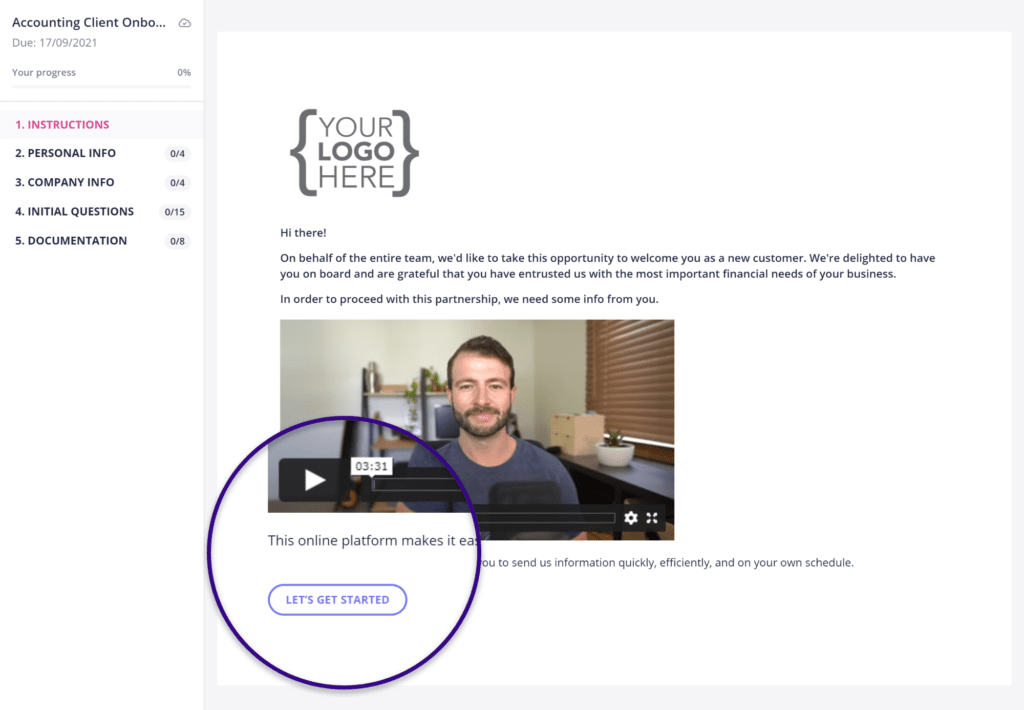
With a dedicated document-gathering tool like Content Snare, you can streamline and automate the process of gathering client information. You can create custom forms and onboarding questionnaires, specify exactly what you need and in what format, and manage submissions all in one place.

Nicholas Edwards is a content writer from the UK.


