


Social media can be one of the most fun marketing mediums to work on. Whether your client sells carpet cleaning services or bubblegum, there’s plenty of opportunity to build brand awareness and engagement on the platforms to show clients your agency rocks.
The best part is that you know your audience is already there — reports show that 5.24 billion people, or nearly two-thirds of the world's population, are social media users.
Of course, you can’t blindly launch a social media strategy and just ask your clients to trust you on it (or maybe you can, but let us know how that plays out). But generally, you need to get all the right information before you take action.
Creating a social media survey for new clients is a good move to help you collect all the information you need about your client upfront, rather than wasting time going back and forth with them.
Here’s how you can get it done.
| Note: Although questionnaires and surveys aren’t the same thing, we’ll use them interchangeably here for the sake of simplicity. |

Here’s a list of the most important questions to ask clients in a social media survey.
Screenshots you’ll see below are from Content Snare’s social media questionnaire template.
You need to learn the basics before digging deeper into your client’s social media strategy. The following questions will help you with that.
1. What is your business name and website URL?
2. What products/services do you consider to be the core of your brand?

3. What makes your business unique compared to competitors?
4. Who are your main competitors (include links if possible)?
5. What are your current marketing efforts (online and offline)?
6. Do you have an internal marketing team or point of contact?
7. What tone are you looking to use across social media?
8. Where are the majority of your customers based geographically?
Here you explore what the client wants to accomplish through social media, so you can align your strategy with their short- and long-term business objectives.
9. What do you hope to achieve through social media? (e.g. brand awareness, sales, leads)

10. Are there specific KPIs or metrics you want us to focus on?
11. Are you launching a specific campaign, product, or event soon?
12. What would “success” look like after 3, 6, and 12 months?
13. What are the biggest barriers/obstacles to your success on social media?
To create meaningful content and reach the right people, you need to understand who their ideal customer is and what matters most to them.
14. What age group(s) are you targeting?
15. Who is your ideal customer? Please describe your audience.
16. What are their interests, habits, or pain points?
17. Are there audience segments you’d like to exclude?
Your client’s brand personality and visual identity shapes how they communicate online. This section helps you create content that feels truly authentic.
18. Are there brand guidelines we should follow?
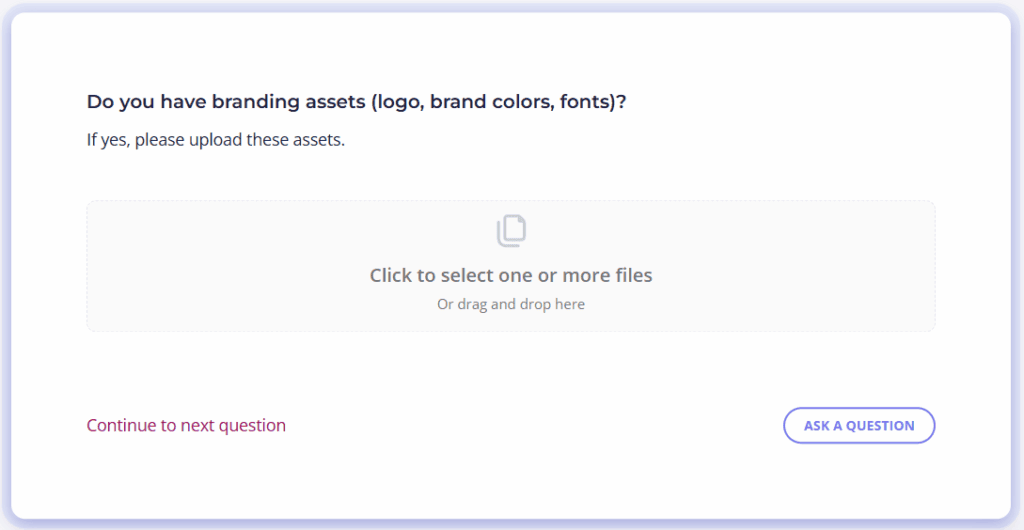
19. Do you have branding assets (logo, brand colors, fonts)?
20. Are there businesses or influencers with a brand voice you admire?
This part gives insights into the client’s existing platforms, past performance, and what’s working (or not), so you can build from a solid foundation.
21. Which platforms are you currently active on? (Include handles/links)
22. Are you satisfied with your current presence and engagement?
23. What content has performed best for you in the past?
24. Have you run paid ads before? If yes, on which platforms?
25. Do you have analytics access you can share with us?
From the type of content, to the desired posting frequency, this section makes it easier to understand your client’s preferences and your creative boundaries.
26. What types of content do you want us to create? (e.g. photos, videos, stories, memes, articles)
27. Are there specific topics, themes, or content pillars you want us to focus on?
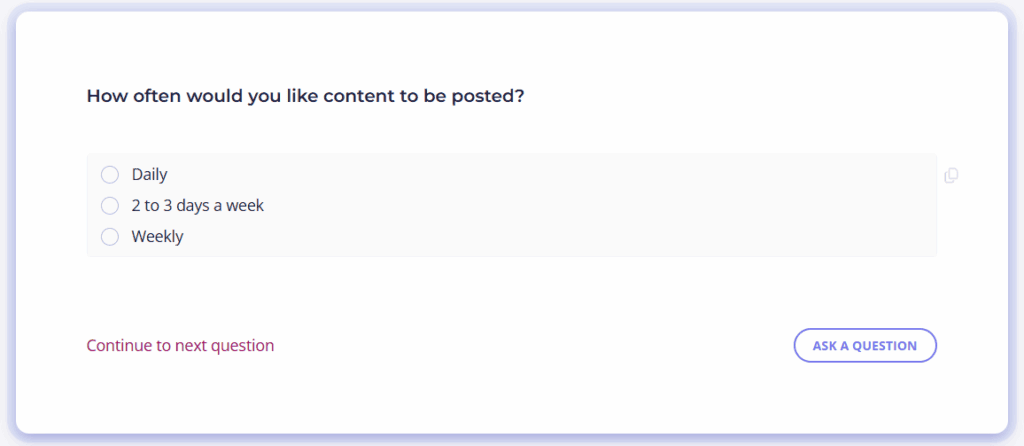
28. How often would you like content to be posted?
29. Are there things you don’t want to post about?
30. Do you have existing photo or video content we can use?
Social media is about connection. These questions help you manage how you interact with followers and handle your client’s reputation online.
31. Do you want us to handle community management (comments, DMs, reviews)?
32. Are there FAQs or canned responses we should be aware of?
33. How quickly would you like us to respond to messages or mentions?
34. Are there sensitive topics or crisis protocols we should follow?
To keep things running smoothly, it’s also necessary to cover practical details around approvals, communication, access, and timelines.
35. Who will approve content before publishing?
36. What is your preferred method of communication and collaboration? (e.g. Slack, email, Trello)
37. Are there key dates, launches, or events we should be aware of?
38. Will you provide us with access to your accounts or do we need to request permissions?
39. Are you open to influencer or partnership collaborations?
40. Is there anything else you'd like us to know?
Now you know the questions to ask in order to obtain relevant and accurate data from your client, but how exactly do you build a social media survey?
Enter Content Snare.
With dozens of ready-made templates, including a social media questionnaire, Content Snare makes it easy to collect information and documents from your prospective clients. That way, you can focus on understanding your client instead of wasting time on building a template from scratch.
Related: How this digital marketing agency saves 50 hours each month using Content Snare
Convenience is the name of the game when it comes to Content Snare. We’ll show you how by explaining its two major benefits:
When your client receives their social media questionnaire through Content Snare, they can answer as much of it as they want to, and come back to it later.
With an auto-save feature built into the forms, all information is saved and your clients can complete the form over multiple sessions, picking up where they left off last.
Content Snare will send your clients email reminders through the platform to remind them to complete the form until they’ve sent it all in. You can set up the frequency of email reminders within the platform and let it do the work for you.
In addition, a number of other built-in features help you collect forms and files from your clients:
Last but not least, you should know some basic principles of writing questions to understand your client and their social media platforms. Here are four important details to remember:

Understanding a new social media client requires effort from your side, but it pays off big time through a whole bunch of valuable insights. Here why:
Developing a social media questionnaire might take some time at first, but do it once and you’ll end up saving yourself lots of time setting up calls, interviews, and sending out emails to your clients to get the information you need.
Creating a client social media questionnaire can be a massive improvement to your agency processes. You’ll thank yourself for doing it later.
Putting together a social media questionnaire is basically one way to do your due diligence on understanding your client’s business before you get started on a project. Just like you would use a brief to make sure everyone’s on the same page, a questionnaire can do the same.
When you do your research, ask the right questions, and get up-to-date answers directly from your client, you’re a lot less likely to completely miss the mark when you deliver your project.
For instance, you’ll learn which social media platforms you should focus on and understand your client’s target audience.
Here at Content Snare, we geek out on making agency processes as efficient as humanly possible, and the process of gathering information is a big one.
Not only will having social media surveys ready help you save time day-to-day, but when you have good systems and processes in place, it reflects really well on your agency. You always win when you make your clients (or prospects) lives easier too.
When you ask your clients some thought-provoking questions about their business, goals, and audience, it gives you a chance to demonstrate your marketing expertise.
As clients answer your social media survey questions, they already begin to understand the value you’re bringing to the table. Ultimately, having a questionnaire helps you sell your agency’s services indirectly and more easily.
If you send your questionnaire out to a potential client and they don’t bother to open it, leave lazy two-word answers, or take their sweet a** time to get back to you, then you’ll already get the idea that they might end up being a difficult client.
Yes, it’s ‘one of those’ you’ll always have to chase around to get work done. Use your social media survey to identify red flags that a prospect might not be a great fit as a client.
Creating a social media questionnaire is one of the simplest ways to set your agency — and your clients — up for success. It’s a shortcut to saving time and helping you deliver better results from day one. So before you jump into social media strategy, take the time to ask the right questions using the best questionnaire template.

Sylva Sivz is a seasoned copywriter here at Content Snare, based out of Vancouver, Canada. She has spent years working in agency environments and moonlights as a touring house DJ!


