


Client onboarding is a process that includes multiple stages, but Know Your Customer (KYC) is the first in line.
Let’s be honest — of all the processes you can enjoy setting up, KYC onboarding won’t send shivers down your spine, but it’s still a critical procedure for building a successful business. KYC makes sure that both you and your clients benefit from a secure and trustworthy relationship.
But how does it work? In this post, we’ll define the concept of KYC onboarding and show you practical tips on how to improve it.
Let’s dive in!
If you’re here for a fast and reliable way to handle KYC during client onboarding, skip the theory and head straight to the solution: Content Snare. Our platform makes KYC simple by giving you customizable online forms where clients can securely submit responses and ID documents like passports, driver’s licenses, or utility bills:

The system keeps almost everything automated, from reminders to progress saving, so you don’t waste time chasing paperwork. On top of that, Content Snare keeps your data protected with bank-level security and an ISO 27001 certification, giving you confidence that compliance and information security are fully covered. This is how Liston Newton Advisory describes their Content Snare experience:
It has improved our efficiency by 50%, but we're still continuously improving it. Data accuracy and completeness increased massively, I would say 70%.
In short, Content Snare streamlines the entire onboarding process to save you time while ensuring compliance.
Tempted?
Sign up for a free 14-day trial and see how much smoother your KYC process can be.

KYC onboarding is the process of verifying the identity and authenticity of customers or clients before they can access your products or services.
The primary goal of KYC onboarding is to prevent financial crimes such as money laundering, terrorist financing, fraud, and identity theft. The second objective is to ensure compliance with regulatory requirements.

KYC requirements vary by jurisdiction and industry. Though it applies to many industries and business entities, we’ll only name some of the most common:
All of these industries have unique KYC onboarding processes, so make sure to check the rules in your niche and location.
Different businesses have different KYC obligations, but certain types of data are mandatory in almost all industries. Here are some types of data you can collect:
If you’re just starting out, these tips will help you build a more efficient KYC onboarding process.

Manual data entry is error-prone and time-consuming, which means you’ll be facing delays in onboarding (and perhaps even penalties). That’s why you should use information-gathering tools or client onboarding software to streamline data collection.
We’ll talk about some of the best tools in one of the following sections, but now let’s just explore the main benefits of using such platforms:
KYC onboarding shouldn’t be a one-time event, but rather an ongoing process. The most important advantages of ongoing due diligence include:
Customer information can change over time, so you should regularly update it. This means verifying their identity, contact details, employment status, and other relevant data points. The pros of this approach are:
The purpose of KYC onboarding is to comply with legal and regulatory requirements. That’s because governments and financial authorities require businesses to verify the identities of their customers to prevent fraud, money laundering, and other financial crimes.
However, the KYC onboarding process also benefits your business because you get to assess possible issues associated with each customer:
Such details help you make informed decisions about whether to onboard a customer or not. In addition, KYC data is valuable for analytics, so you can offer personalized services and launch targeted marketing campaigns.
Customer onboarding involves a lot of repetitive tasks. The good thing is that you can automate most of them using a dedicated KYC tool. In this section, we’ll show you our top three solutions.

Content Snare is one of the leading document and information-gathering platforms. This tool makes it easy to complete the entire KYC onboarding process thanks to its user-friendly online forms. You can build a KYC form from scratch or customize one of our ready-made templates.
All it takes is to send a request to your client, so they can fill out the form and upload identification documents like passports or driver’s licenses.
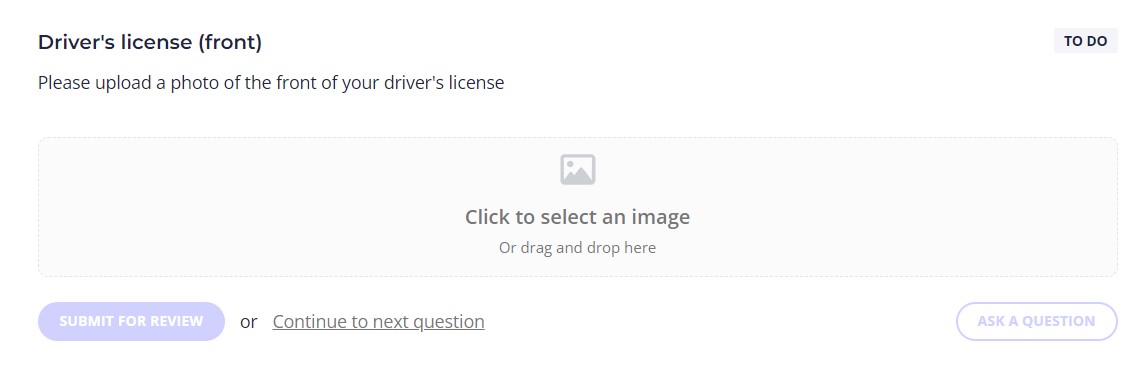
But you get much more with Content Snare. This platform speeds up the client onboarding process thanks to a comprehensive toolkit:
Streamline the way you capture client information with our customizable forms. With Content Snare, you’ll get the KYC onboarding process completed in record time.
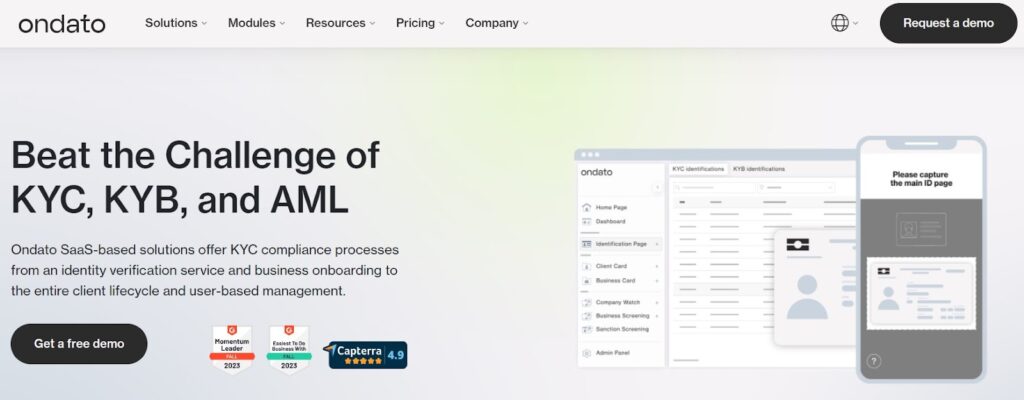
Ondato is a KYC onboarding system with a comprehensive suite of services. It’s the go-to solution for businesses in many industries, including financial institutions, fintech startups, and e-commerce platforms.
This platform can scan and verify identity documents. Ondato also employs advanced optical character recognition (OCR) technology to extract information from documents and cross-reference it with user-provided data. Other useful features are:

If you feel like combining intelligent automation with decision management, Actico is one of the first options to try. This software offers a range of services ranging from automation and compliance to KYC and smarter decision-making.
With Actico, you can create and modify business rules, logic, and decision models without extensive coding. It also divides customers into different risk classes, conducting regular re-evaluations for high-risk clients. Other features you should know about include:
KYC plays a critical role in maintaining trust, mitigating risk, and ensuring long-term success. A well-optimized KYC plan will bring many benefits to your organization, from compliance to improved customer experiences and operational efficiency.
The simplest way to do it is to invest in modern technology, as it will assist you in making informed decisions with confidence.
Remember, the KYC process isn’t just about ticking regulatory boxes — it's about making the company more efficient and forging stronger relationships with your clients.

Dražen Vujović is a journalist and content writer. More importantly, he is a father of two and a long-distance runner.


