



Project management is as much about data as it is about strategy and teamwork.
From success rates and budget overruns to industry-specific performance metrics, project management statistics can help you learn what drives projects to succeed — or fail.
In this post, we’ll explore the most relevant industry figures, so you can make better project-related decisions.
Let’s take a closer look!
The first set of stats gives you a general overview of the project management industry.
Based on the same report, the industry is expected to grow at a CAGR of 13.0% from 2025 to 2030.
Most professionals recognize project portfolio management as a strategic tool for aligning projects with business goals and organizational success.
This essentially means that project managers must have excellent multitasking skills and the right tools to manage competing priorities.
Although most organizations are trying to improve planning and execution, inefficiencies still make a big financial impact in project management.
The same percentage of teams (30.5%) have 1-5 or 11+ people involved in the process.
This section provides a quick breakdown of project management performance across different industries, including IT, construction, and healthcare.
The dominance of IT in project portfolios is clear, and it proves the vital role of technology in driving organizational growth.
In addition, public sector organizations see three times higher cost overruns on average.
This is the highest percentage of remote-only project managers across all industries.
The biggest priority for 83% of construction firms is to improve the estimating accuracy of equipment and materials.
The following figures provide insights into the percentage of projects that meet their goals, fail, or face delays, with data on underlying causes.
This reveals the sheer complexity and risks associated with larger-budget projects. In a nutshell, large projects require extra planning, risk management, and oversight to improve outcomes.
With no clear goals in place, a lot of teams struggle with prioritization and decision-making. As a result, this leads to wasted effort, misaligned expectations, and ultimately project failure.
On average, IT projects overall — regardless of size — exceeded their budgets by 75%, overran their schedules by 46%, and generated 39% less value than predicted.
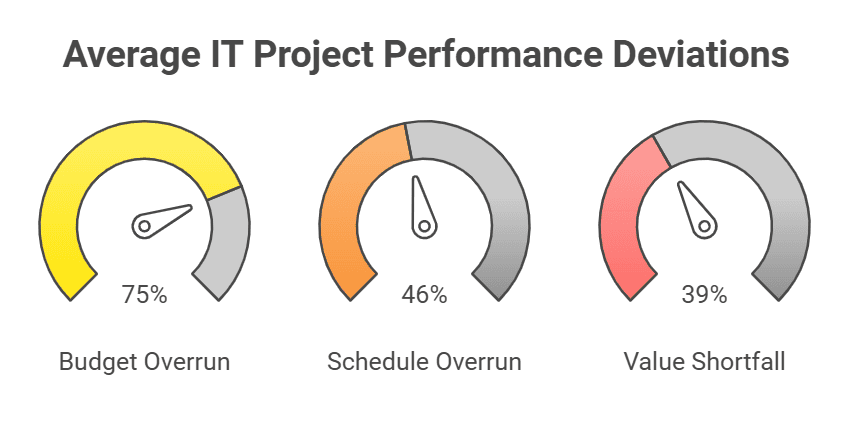
To make things worse, projects were failing despite these owners’ confidence in project planning and control mechanisms.
Based on this figure, PMOs often struggle to demonstrate sustained value, which suggests a need for better alignment with organizational goals and measurable impact.
In other words, only 20% of project managers are satisfied with the way stakeholders collaborate with them.
However, less than half (45%) of PMOs have clearly defined roles and responsibilities.
In this section, we’ll analyze statistics on job demand, salaries, and the impact of certifications like PMP or Agile on career opportunities and project outcomes.
This has to do with several reasons — the overall economic growth, an increase in the number of jobs requiring project management-oriented skills, and retirement rates.
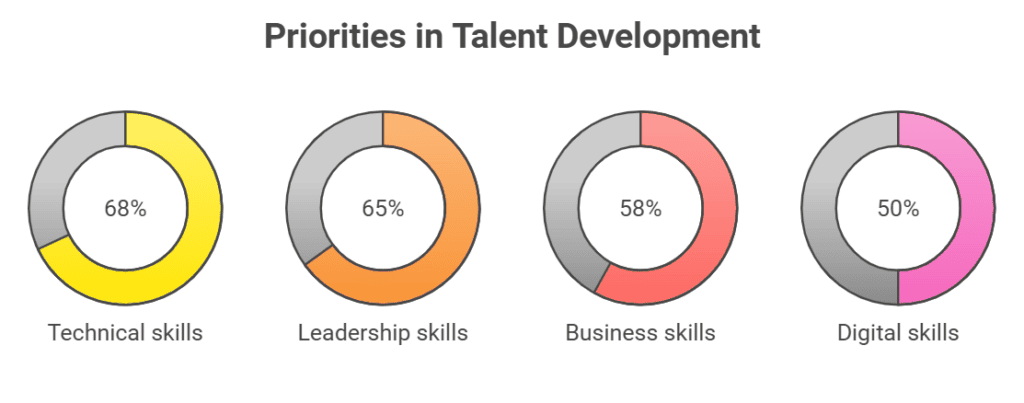
There’s the growing recognition that successful project management requires a balance of technical expertise and other types of skills to effectively guide teams.
According to BLS, project management specialists usually work in an office setting and occasionally travel to visit clients.
This represents a major 21% in just 10 years.
Based on this report, UK-based professionals make $114,000 a year, while French project managers earn $116,250 on average.
The last section focuses on the most recent trends in project management technology, so you get to understand the role of software solutions in improving project efficiency and team performance.
In addition, the industry is projected to grow at a CAGR of 15.7% until 2030.
On the other hand, they also believe that it’s hard to find tools that successfully combine all three of these elements.
This goes hand in hand with another figure: 77% of high-performing projects use project management software.
AI has the potential to improve project management by automating repetitive tasks like scheduling, resource allocation, and risk analysis. That way, managers can focus on strategy and leadership.
While project management statistics offer some interesting insights, you don’t want to get lost in the numbers. Obsessing over every metric can distract from what truly matters — delivering value to your business and stakeholders.
That’s why we encourage you to focus on stats that align with your business goals. Let the data inform your strategy without overshadowing the human elements that make every project unique.

Dražen Vujović is a journalist and content writer. More importantly, he is a father of two and a long-distance runner.


