



Lawyers are the heart and soul of the justice system because they bring laws to life, uphold justice, and safeguard individual rights. But what does the legal profession look like by the numbers?
In this post, we’ll explore the most important lawyer statistics to reveal everything from employment trends and demographic data to income averages and industry growth. Let’s break down the numbers and see what they reveal about the legal profession.
Let’s dive into big-picture numbers, so you can quickly figure out the scope and impact of law firms and the legal sector as a whole.
The industry is projected to grow at a CAGR of 4.5% from 2025 to 2030. In other words, it should reach nearly $1,370 billion in 2030.
In such circumstances, it’s natural to see US law firms holding the majority of spots in the global 200 rankings.
This US-based firm employs over 3,500 people and generates more than $7 billion a year.
This country has a population of 9.7 million and more than 64,000 lawyers.
Who are the people behind the profession? The following numbers will provide insights into the diversity and representation in law.
This is 3.2% more compared to 2014. A quarter of all legal professionals are based in New York and California.
By comparison, the median age of all US workers is 42.1, which is nearly four years younger.
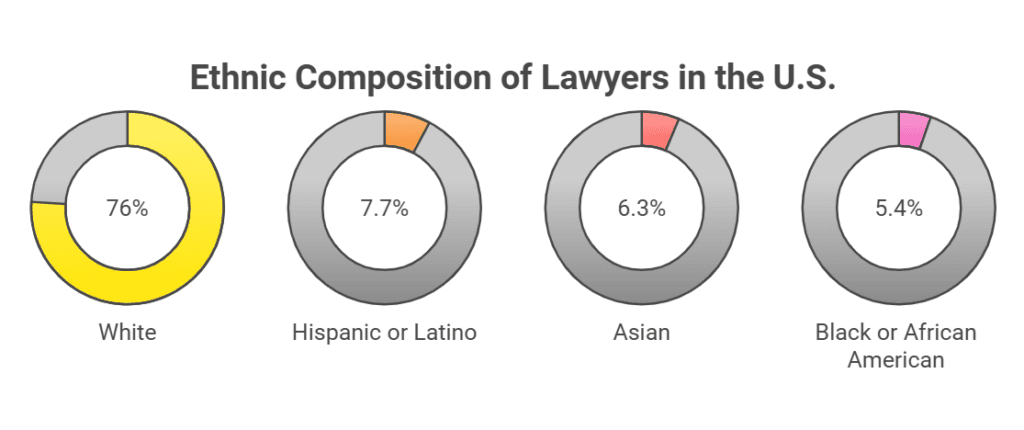
The most common ethnicity of lawyers is White (76%), followed by Hispanic or Latino (7.7%), Asian (6.3%), Black or African American (5.4%), and others.
The number is on the rise as there used to be 57,000 and 71,000 lawyers in the country in 2011 and 2016, respectively.
Nearly a quarter of those (247K) work in Italy. Other major legal service markets include Germany (165K), the UK (152K), and Spain (149K).
This section examines employment trends, future growth projections, and what lawyers can expect to earn. If you’re looking for a snapshot of career opportunities in the legal profession, this is where you’ll find it.
The Bureau of Labor Statistics reports that the employment of lawyers is estimated to grow by 5% from 2023 to 2033, about as fast as the average for all occupations. About 35,600 new jobs for lawyers should open each year.
The range is quite broad, but it reflects the diversity of roles and experience levels within the legal profession. Entry-level lawyers or those in smaller firms often fall toward the lower end, while experienced attorneys — particularly in specialized fields or larger firms — are likely to earn closer to the upper limit.
On the other hand, German lawyers typically make $75,000 annually, while their colleagues in the UK earn about $63,000.
In addition, only 20% of law degree holders believe that education prepared them well for life outside of graduate school. In comparison, this is 30 percentage points lower than medical degree holders.
There is still a slight difference in satisfaction between genders, with men reporting satisfaction at 65% and women at 60%.
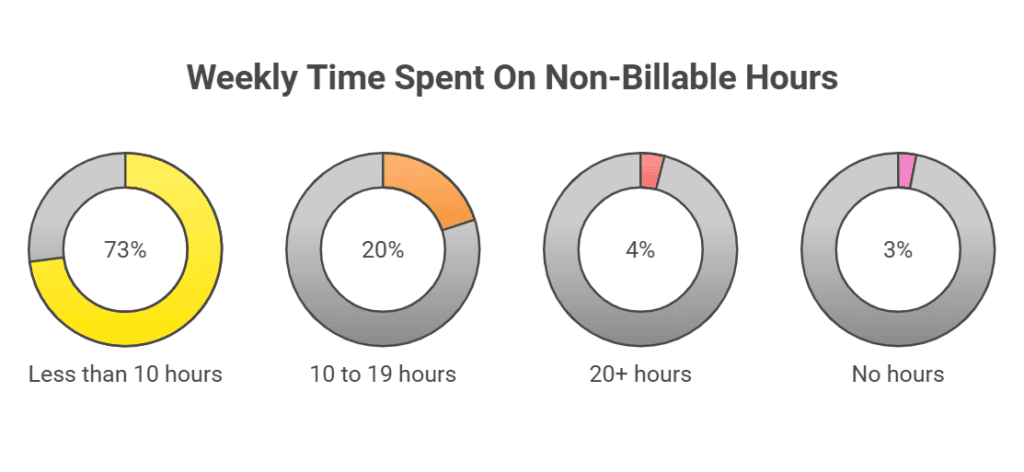
On the downside, 20% of attorneys spend more than 10 hours on non-billable tasks, while 4% spend over 20 hours a week on such activities.
Consequently, this means that solo and small firms aren’t invoicing 14% of billable hours to their clients, and that 10% of billed amounts aren’t being collected at all.
Hourly billing is particularly prevalent among legal practices serving businesses (89%). On the other hand, fixed fee billing is more common among solo practitioners (60%) than employed attorneys (35%).
The exact percentage may vary based on the case’s complexity and jurisdiction.
Technology is transforming how lawyers work, so let’s investigate the most important statistics on how legal tech is being adopted and which tools are most popular.
This industry has been increasing steadily for years and its revenues should grow well over $35 billion in 2027.
In addition, 84% of firms have reduced the delivery time of services by implementing new technologies.
There’s a gap between recognizing the importance of innovation and taking action, which suggests that small firm lawyers often face barriers like cost, time, or uncertainty in adopting new technology.
As for attorneys practicing in small firms, 47% of them report using this type of software.
The main reasons firms introduce new technologies are to improve service quality (72%), increase efficiency (71%), or allow staff to work more flexibly (44%).
Providing round-the-clock access to case files through a secure client portal for law firms shows how simple tech solutions can significantly improve the client experience.
From surprising trivia to niche data points, this section gathers fascinating stats and facts that don’t quite fit anywhere else.
Contrary to the common perception of attorneys working in large corporate firms, the vast majority actually work for small practices.
She had to sue the State Bar of Iowa in order to sit for its bar exam – a privilege that had been exclusively reserved for males. Born in 1844, Ms. Mansfield passed the bar exam and was admitted to the Iowa Bar in 1869.
These specialized areas deal with unique legal challenges, such as satellite regulations or pet custody battles, and it goes to show the wide variety of legal practice areas.
Although online searches are growing, the overwhelming reliance on referrals shows how much trust and personal recommendations still shape the decision to hire a lawyer.
The earning potential at the top of the legal profession is mind-bending, but it's far from the norm for most attorneys.
The court found McDonald's liable for serving coffee at an excessively high temperature that posed a foreseeable risk of harm.
The purpose of lawyer statistics isn’t just to know the numbers, but rather to use them as a basis for making smarter business decisions. That’s why we encourage you to use these figures to position yourself strategically — whether it’s choosing a specialization, negotiating a salary, or preparing for the future of law.

Dražen Vujović is a journalist and content writer. More importantly, he is a father of two and a long-distance runner.


