


“I don’t have the time to tackle everything I need to.”
“I’m facing burnout.”
Almost all business owners have had these thoughts.
While growing a business is truly exciting—hands up if the results of your hard work are finally starting to show!—it’s common to face growing pains.
Growing pains can look a little something like this:
The problem is, it’s hard to maintain growth with these types of issues. So how do you sustainably expand your business?
Rather than outsource even more work (costly) or cut down on your beauty-sleep (unhealthy), we suggest another solution: identify the bottlenecks of your workflow and implement the right business automation tools to tackle them.

A business automation tool is a targeted software developed to solve specific, recurring inefficiencies.
They can help you simplify workflow, manage documentation, improve client relations, optimize team management...the list goes on.
With tons of automation tools to choose from, your next question might be: what does my company need to automate?
While the answer to that question will take some internal digging, we can simplify your search process. In this post, we’ve rounded up our favorite automation tools that target key focus areas for most companies, including:
Are you using email to collect information from clients? If you’re tired of dealing with the inevitable back-and-forth email and constantly chasing them up, give Content Snare a try. Content Snare automates information collection so you can get back to delivering great client work.
The client onboarding process is a vital step to a healthy and lasting working relationship.
Since first impressions matter, it's important that this step is made as easy as possible for you and your clients, especially in industries like accounting, legal services, and digital marketing, where efficiency and data security are paramount.
Before a project can even begin, lots of information and data needs to be exchanged and gathered. With customer expectations on the line, you want to make this process seamless and straightforward.
You can do that with proper client onboarding automation tools. A great one will minimize downstream issues, remove time-consuming onboarding tasks (endless email threads, we’re looking at you) and leave time for important work, like nurturing genuine client relations.
Best for: collecting content from clients, simplifying client communications and file transfers.
Manually collecting documents from clients can take up to several hours per project - something businesses can no longer afford. Some clients miss sending important files. Or, they send the wrong ones. Or, they just link to a shared folder full of unorganized files.
On the other hand, businesses using Content Snare reduce time spent gathering information by 71% and stalled projects by 67%.
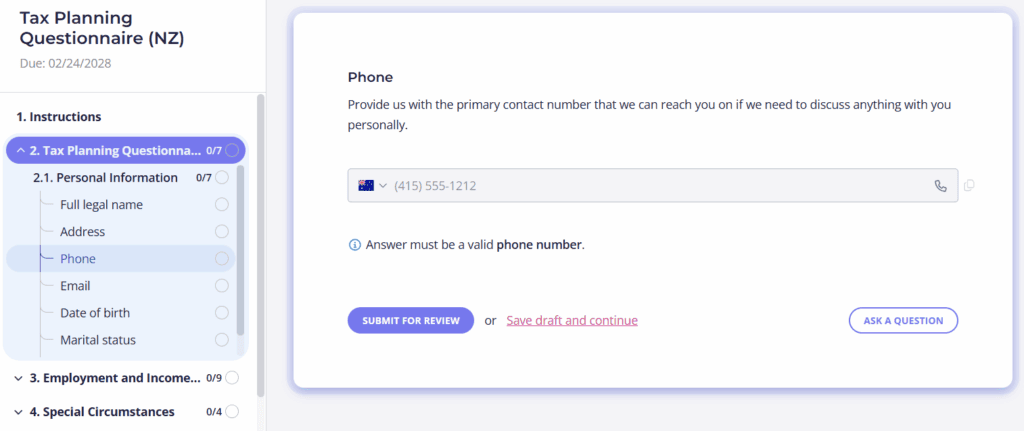
That’s why we built Content Snare in the first place: to streamline the process of collecting information and documents from clients through automation, secure portals, and branded workflows. In the words of Northwest Accountancy’s Jodi Porteous:
I love the fact that clients can ask questions straight within Content Snare. So our accountants get a complete, finished set of information with all questions answered before it comes to them to do the tax return. That’s a big one for us.
Content Snare is an all-in-one, ISO 27001-certified client portal built for industries where secure and compliant file transfers matter.
Features we love:
Pricing: $ to $$, Low to Medium
Content Snare is a cost-efficient service divided into three monthly plans, plus a custom solutions alternative.
The lowest cost option starts at $35 per month and you can sign up for a 14-day free trial right here.
Imagine manually emailing every customer whenever you wanted to share something about your company. Yikes! Before automation, marketers would spend precious hours on similarly tedious tasks.
Thankfully, today we have marketing automation tools. They help remove repetitive work and streamline your processes so that you can efficiently reach and scale your marketing goals.
There are tons of automation tools that serve different marketing needs. And some are better than others. We’ve earmarked two marketing automation tools based on their ease-of-use and capabilities versus their competitors.
Best for: comprehensive email automation and sales automation CRM.
ActiveCampaign is user-friendly with some serious power under the hood. It’s an advanced marketing automation tool that provides some of the best email marketing automation and CRM we’ve seen—and cuts all the fluff.
ActiveCampaign’s drag-and-drop automation builder is simple to use and features clean visuals; it takes minutes to craft an automation. You have tons of triggers and actions to choose from and can view your entire automation sequence on one screen.
Their CRM visually maps out the end-to-end sales process. You can drag-and-drop your leads through the sales funnel, triggering automations as you do.

Features we love:
Pricing: $ to $$, Low to Medium
You can choose between plans that run from $9 per month to $299 per month for enterprises.
Best for: email automation on a budget and email marketing for independent creators.
ConvertKit is an email marketing platform used by content creators and small businesses to grow their brand and translate their following into revenue.
ConvertKit offers a focused selection of functions designed to run successful email marketing campaigns, grow your audience and nurture subscriber relations, with sales conversion in mind.
A majority of their users are content creators, freelancers and small businesses. With that in mind, ConvertKit keeps its email marketing platform simple. They avoid overwhelming users with thousands of automations. Instead, they focus on the ones their user base would need most and include a number of handy templates.
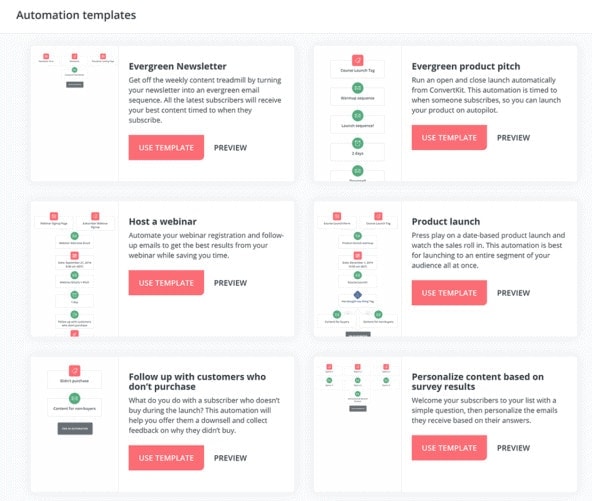
Features we love:
Pricing: $, Low
ConvertKit offers a base service package for free. As long as you have under 1,000 subscribers, it’s a no-dollar a month deal.
They also offer two additional levels at $29 and $59 per month (at this time of writing) with expanded functionality.
As your business grows, so does the need for automated processes and holistic management systems.
This is where business process automation tools can come in. BPA is the use of software to automate complex business processes or transactions.
Oftentimes, business processes are multi-system and multi-step when they don’t have to be. By tying systems and data sets together, tasks can be simplified. And with automation, you reduce the chances of human error.
The goal here is to streamline your workflow to support your employees and keep operational costs down. One of the most established BPA tools on the market today is Kissflow.
Best for: full-suite business process automation and streamlining workflows.
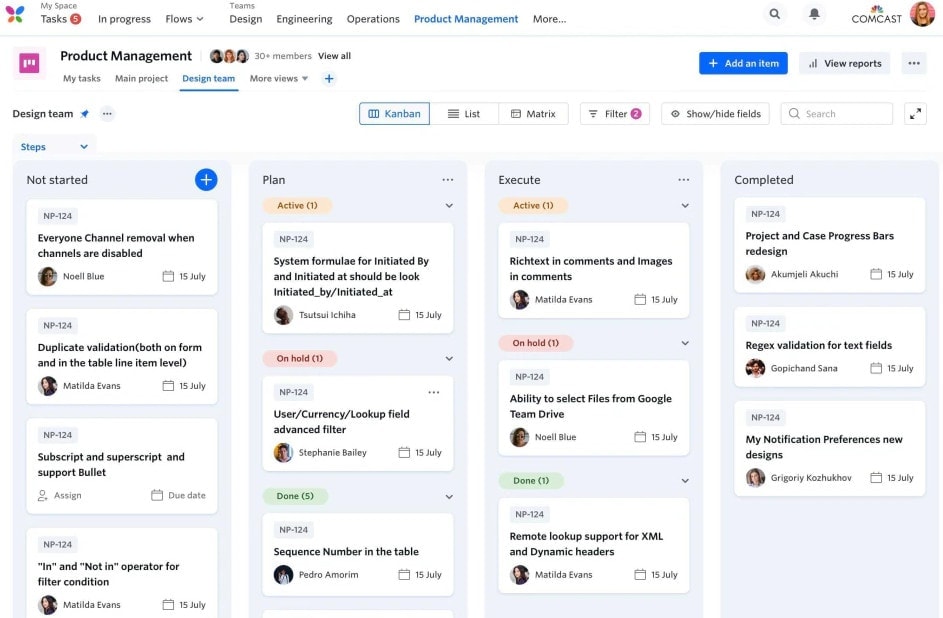
The mantra of Kissflow is simple. Their software consolidates your workflow and business processes under a single platform (they call it Kissflow’s Digital Workplace).
Kissflow offers a huge range of BPA products. Each is designed to simplify some aspect of your business, and they all work in tandem.
These are cloud-based services with a low-code (or no-code) approach to administrative tools, purpose-built to optimize business management.
Features we love:
Pricing: $$$, High
Kissflow Digital Workplace, their all-in-one platform for business management, starts from $240 per month.
This price tag may seem high compared to other cloud-based automation software. However, Kisslfow does represent the premium end of the spectrum and their business process automation tool offers more features than most competitors in the market.
They offer free trials with full functionality so you can try before you buy.
Few things today are as important to your brand image as your social media presence. This is where you let customers know what you’re all about. It’s also a valuable tool to publicly engage with the people that care about you.
Maintaining your socials is a must, but it can also turn into a routine time-sink. Automating portions of your social media tasks, from social listening tools to chatbots and analytics software, will save you a ton of headache—and ultimately help your bottom line.
Here are some tools that can help your company save time and stay on top of the social media game.
Best for: improving collaboration in small to mid-sized social media teams.
Buffer is an incredibly popular social media toolkit. And for good reason.
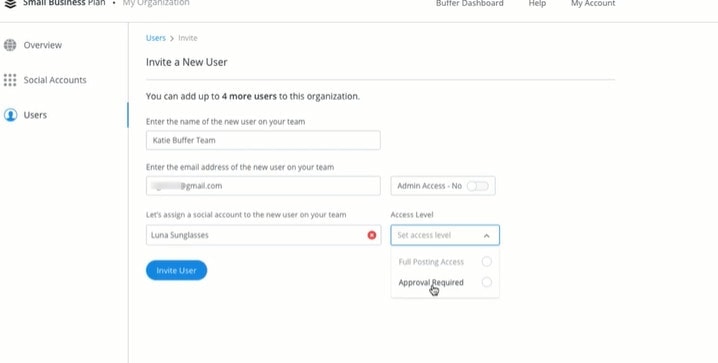
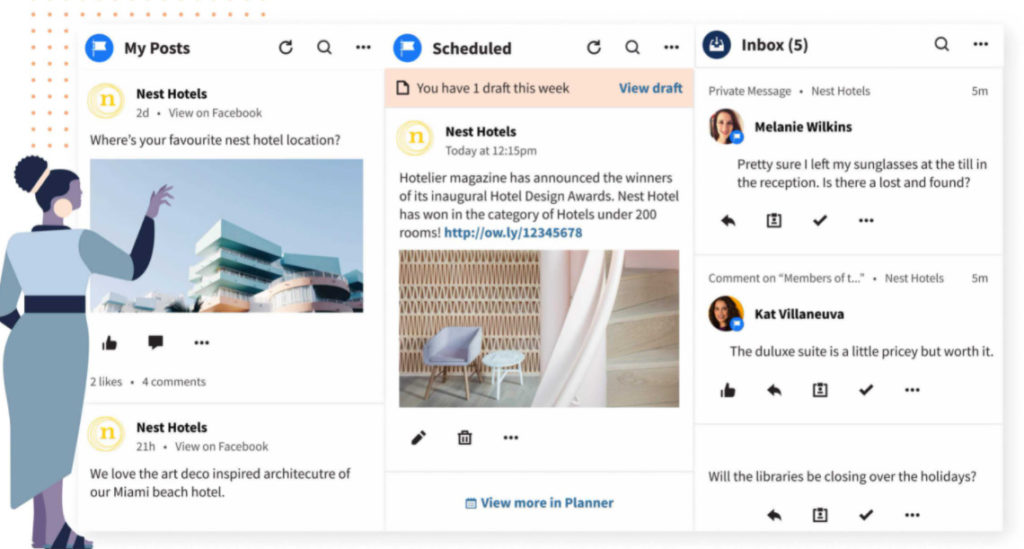
It sports both fantastic visual clarity and considerable depth. A cross-platform dashboard lets you easily manage social media content between different channels directly in-app.
Special care has been given to accommodate greater team collaboration, and Buffer hosts a number of features dedicated to team management.
Features we love:
Pricing: $, Low
To cater to smaller businesses and entrepreneurs, Buffer offers an indefinite freemium model with limited functionality.
Their full package deal is priced at $6 per month per channel. That means if you manage five channels spread between different social media, your total would be $30 per month.
Best for: large businesses or enterprises in need of comprehensive solutions to big social media goals.
Founded in 2008, Hootsuite is seen as the senior citizen in the world of social media tools. Today, it remains an industry institution with a massive user base. If you’ve heard of any social media tools before—chances are it’s this one.
With noted market maturity, Hootsuite has a lot on offer.
Features we love:
Pricing: $$ to $$$, Medium to High
Hootsuite has different pricing tiers for varying levels of service.
Their entry-level plan is $49 per month but comes with pretty limited functionality. The more users and tools you want to add on, the higher the costs.
Their business plan, at $599 per month, has extensive features. However, you still may end up paying more depending on any add-ons you need.
Sometimes the problem isn’t finding tools you like—it’s getting them to play nice together.
Luckily, there’s some pretty amazing software out there that specializes in just this. They take all of your favourite applications and essentially make them work together.
You can create triggers and actions between different apps, which eliminates the hassle of moving information between multiple apps. And as a result, you get to focus on progress instead of time-consuming processes.
Best for: automating tasks between two or more apps.
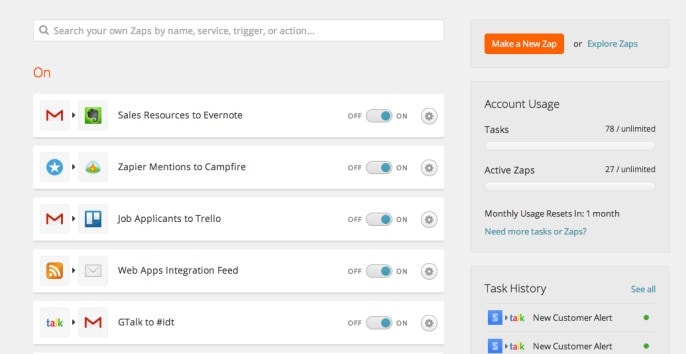
Some think of Zapier as the app that ties it all together. It lets you automate tasks between two or more different web-based apps—as simple as that!
Zapier has integration with over 3,000 apps (including ours) and pays attention to user-friendliness. You can easily set up a trigger event and one or more actions between apps, following the simple command of: “when this happens, do that”.
Features we love:
Pricing: $ to $$$, Low to High
On the lowest end, Zapier offers a forever free plan with 5 Zaps (they call an automated workflow a Zap) and 100 tasks per month.
You can scale up to a company plan at $599 per month, featuring unlimited Zaps, 100,000 tasks per month and a more extensive list of features.
Workplace automation is not a matter of if but when. Companies of the future will harness the power of automation (we’re big fans of it here at Content Snare). A 2020 global survey conducted by McKinsey & Co. found that 66% of business leaders were already testing automation solutions for at least one business process.
Knowing what or when to automate is not always easy. There is no one-size-fits-all solution. Every business is unique, and so are its needs.
But you can identify which processes need a helping ‘hand’ by familiarizing yourself with automation tools options. If you do notice that too much time is spent on unproductive or repetitive tasks, it might be time to invest in the right tool for your business.

Helen is a creative copywriter with over six years of agency experience in the marketing and branding world. She’s crafted campaigns and content for brands like Accor and Ford to lean and local small businesses. Based out of Bangkok, when she’s not typing away at her keyboard, she’s probably stuck in traffic.


