


The pressure modern businesses deal with is growing.
Clients want things to get done faster, better, and more accurately — especially when it comes to accounting and financial data. On the other hand, roughly 70% of accounting firms struggle with client document collection and cite inefficiencies in manual processes as their top bottlenecks.
Traditional practices can hardly cope with such challenges, but modern firms do it successfully thanks to accounting technologies. In this post, we’ll explain the basic types of technologies in accounting, as well as their benefits and challenges.
But before we get into that, let’s answer the key question…

Accounting technology is an umbrella term for tools, software, and systems used in the accounting profession. These systems support compliance with GAAP standards, facilitate audit readiness, and often include bank-level encryption and role-based access controls for data security.
Most of these platforms streamline accounting processes using:
We’ll delve deeper into different types of accounting technologies in the following section.

Accounting technology trends are versatile, with new software solutions popping up quite frequently, but here’s an overview of commonly used technologies in contemporary accounting:
Specialized software platforms automate many accounting tasks. These include invoicing, bookkeeping, payroll processing, financial reporting, inventory management, and many more.
Notable examples: QuickBooks, Xero
ERP systems facilitate seamless communication between different departments. With these tools, accounting firms can integrate financial data and keep the highest level of accuracy across the entire organization.
Notable examples: SAP Business One, Oracle NetSuite, Microsoft Dynamics 365
Cloud computing makes it possible to store and access financial data through remote servers. It powers real-time collaboration, data backup, and accessibility. In addition, cloud computing offers scalability, allowing businesses to expand their computing resources during busy seasons.
Notable examples: Amazon Web Services (AWS), Microsoft Azure, Google Cloud
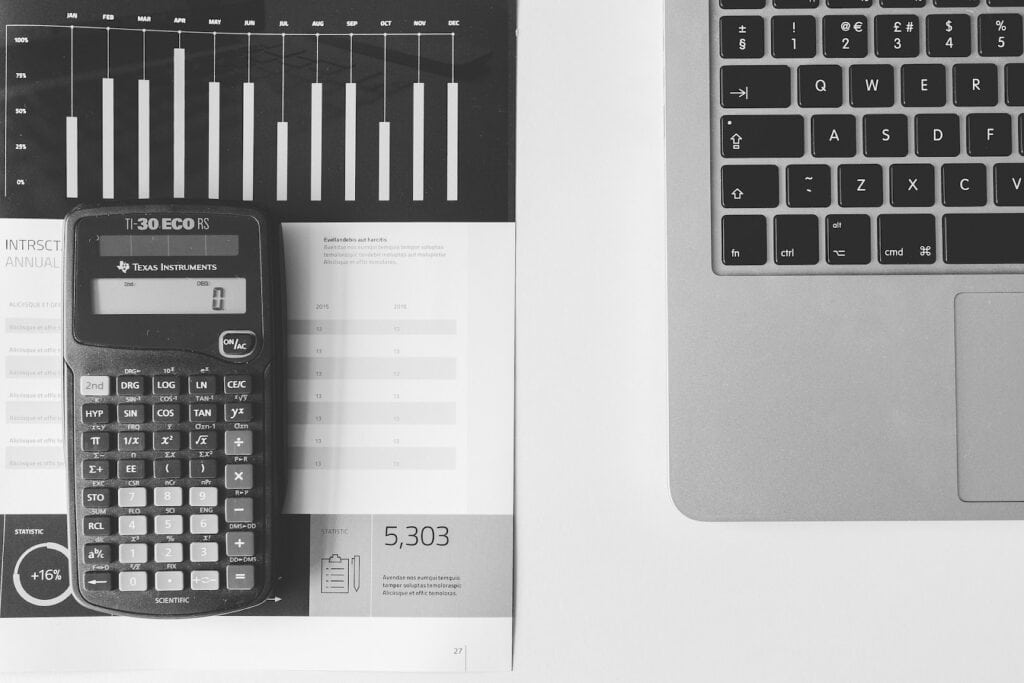
Accountants can use modern data analysis tools to interpret financial data for insights, forecasting, and strategic decision-making.
Notable examples: Tableau, Power BI, QlikView
RPA tools help accounting professionals to handle repetitive manual tasks, including data entry, reconciliations, and reporting. But that’s not all there is to RPA — these platforms can also cope with complex accounting tasks, such as cross-referencing data from different sources.
Notable examples: UiPath, Blue Prism, Automation Anywhere
Almost all advanced technologies rely on some form of AI. In accounting, this means using AI for tasks like fraud detection, risk assessment, data analytics, pattern recognition, and so on. On top of that, many accounting firms use AI-driven chatbots to provide instant responses to financial queries.
Notable examples: IBM Watson, Oracle AI
This is a relatively new technology in accounting, but some organizations already use it for secure and transparent recording of financial transactions.
Notable examples: Ethereum, Hyperledger Fabric, Ripple
Online payment gateways and e-invoicing are omnipresent in modern accounting. That’s because EPS enables automatic reconciliation of payments, reducing manual effort in matching payments with invoices.
Notable examples: PayPal, Stripe, Square

You can also use tax preparation tools to speed up tax calculations. Most tax preparation platforms include features like automated calculations, real-time tax law updates, and electronic filing options.
Notable examples: TurboTax, H&R Block, TaxAct
Accountants work with many clients, and they all have to gather lots of information and documents. Data gathering tools make this process much simpler thanks to tailored document collection templates and automated reminders.
Notable examples: Content Snare
Tired of chasing clients for missing info? With Content Snare, you can create custom forms, send automatic reminders, and gather all the information you need in one place.

The purpose of new technologies is to make the job easier for accounting professionals, and it does so in many different ways. Here are the most important benefits:
Traditional manual processes, such as manual data entry and reconciliations, are time-consuming and prone to errors. However, accounting firms can now complete these tasks in a fraction of the time.
Related: How this accounting practice broke free of a never-ending loop of inefficiencies
Not only does it make accounting more efficient but also drastically reduces the chances of human error. This means accounting technologies save valuable time while ensuring that financial records are kept with utmost precision.
Tech innovations have paved the way for streamlined financial reporting processes. The accounting world was packed with complex and time-sensitive tasks like:
Today, specialized accounting software compiles data from various sources to generate these reports with just a few clicks. This allows accountants to focus more on analyzing the data and providing strategic insights to their clients.

Almost 50% of businesses reported some sort of cybersecurity breach in the last few years. It’s a warning sign for accounting firms, which is why so many of them rely on advanced technology to protect their clients’ data. Tech innovations in this area include:
All of these features provide a higher level of protection for sensitive financial information.
Gone are the days of waiting weeks or months for financial updates. With the help of technology, accountants can now access real-time financial data and provide timely insights to their clients.
Thanks to cloud-based software solutions, you can access documents and cooperate with your colleagues or clients remotely. Remote work has become more feasible than ever, allowing accountants to provide their services from anywhere in the world.
This not only improves flexibility but also enables CPAs to serve a broader clientele without geographical limits.

Tech innovations obviously bring a lot of benefits to the accounting industry, but the process is far from flawless. If you’re preparing to upgrade your accounting department, you should count on these challenges:
| Note: The benefits of accounting technology drastically outweigh the drawbacks. |
Many accounting practices don’t know if it’s the right time to invest in accounting technology, but we’ll give you a few hints. If you notice one (or more) of these signals, rest assured it is time to switch to a more advanced technology.
If your accounting practice is experiencing a steady increase in the number of clients, transactions, or the complexity of accounting tasks, it's a clear sign that manual processes may no longer be sufficient.

If your accountants are spending a significant amount of time on routine and repetitive tasks (data entry, reconciliations, report generation, and similar), automation can greatly improve the efficiency of your team.
Almost all clients expect real-time access to their financial information and reports. Can you meet their demands?
If not, it’s time to embrace accounting technology.
Seeing your competitors leverage technology to streamline processes, improve client relationships, and deliver more sophisticated services is a red flag. You may not realize it now, but falling behind tech-wise will probably hinder your competitiveness in the long run.

If you spend more time sending email reminders than analyzing financial data, you have to streamline your document collection procedures. Thankfully, this problem has a quick fix.
Enter Content Snare.
Our tool is designed to help accounting firms simplify data and information gathering. Instead of back-and-forth emails, you can use Content Snare’s ready-made templates with automated reminders. In addition, the system makes it easy to collect files with additional features:
The impact of Content Snare on accounting productivity is huge. Here’s how Jodi Porteous, Northwest Accountancy’s CEO, describes it:
I love the fact that clients can ask questions straight within Content Snare. So our accountants get a complete, finished set of information with all questions answered before it comes to them to do the tax return. That’s a big one for us.
With so many advanced functions, Content Snare is your best option for streamlining information gathering.

Dražen Vujović is a journalist and content writer. More importantly, he is a father of two and a long-distance runner.


