



Financial planning isn’t just for the wealthy or the overly cautious — it’s for everyone.
Whether you’re saving for your dream home, planning for retirement, or simply trying to manage monthly expenses, having a financial plan is the only way to turn these aspirations into reality.
However, official reports show that many people overlook this essential step.
In this post, we’ll guide you through financial planning statistics that show how important it is to take control of your finances. Let’s take a look!
These general statistics offer a snapshot of how people approach their finances. This includes everyone — from those who carefully map out their goals to the many who are flying blind.
More surprisingly, 20% of US households with incomes above $150K also appear to be living paycheck to paycheck.
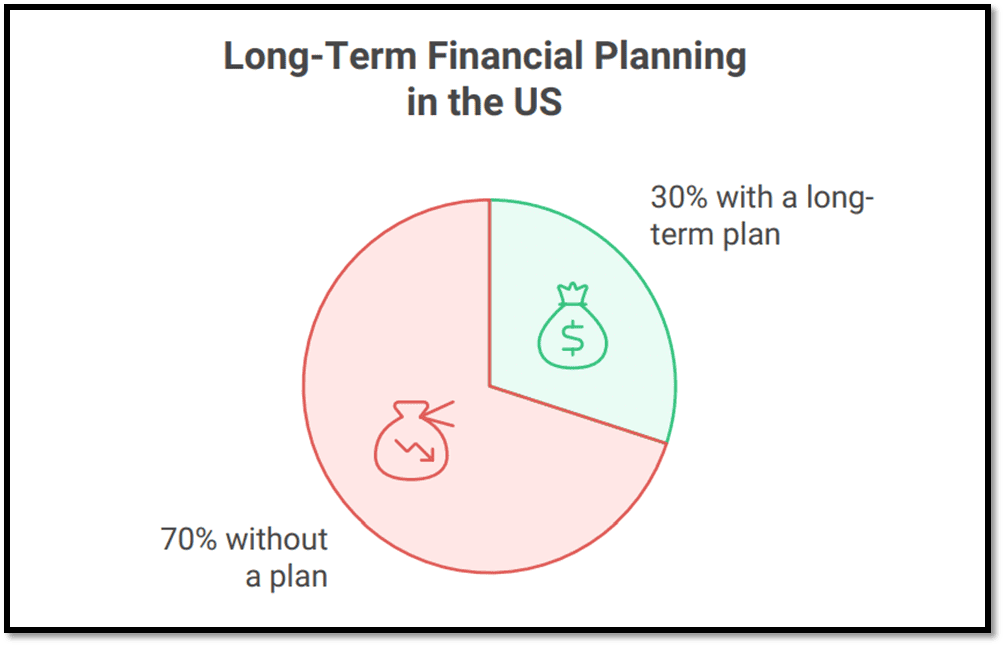
Conversely therefore, around 70% of Americans don’t have any long-term financial planning strategies.
This is a widespread vulnerability — without an adequate emergency fund, many households are just one unexpected expense away from financial distress.
This is 12 percentage points higher than what it was two years earlier (33%).
According to Bloomberg, traditional methods of wealth accumulation, such as real estate ownership, are no longer the most relevant aspect of their financial plans.
At the same time, 11.5 million have less than £100 in savings, while almost 9 million are in serious debt.
Financial priorities and challenges vary widely between generations. For example, many Millennials are still coping with student debt, whereas Baby Boomers are already preparing for retirement. Let’s see how different generations manage financial pressure.
They are also more confident than other generations that they will be able to retire comfortably.
Most of them (66%) have zero retirement savings, and those who do aren’t saving nearly enough.
In addition, 36% of them feel they will never achieve financial security.
Debt and savings are two sides of the same financial coin — one undermines security, while the other builds it. These statistics illustrate how debt impacts saving habits and vice versa.
In contrast, the average savings account balance is much higher at about $62,410. This average is skewed by a small number of households with very high savings, which inflates the overall figure.
The figure includes mortgage loans, home equity lines of credit, auto loans, credit card debt, student loan debt, and other debts like personal loans.
The figure suggests a pretty strong focus on financial prudence compared to global averages.
This stat clearly shows that many families in the EU zone are still facing significant financial pressures.
In addition, 43% of renters have just one monthly income or less in savings. This is over two times more compared to homeowners (19.6%).
There are about 9.2 million households in the country, suggesting household debts total just under $2.6 trillion.
However, many households owe £8,560 in student loans, while those with a mortgage owe another £193,790 on average on their homes.
The mean average amount of money held in a UK savings account is £17,365.
Financial literacy is the foundation of good money management, but many people lack the knowledge to make informed decisions. This section uncovers statistics on financial education and how working with financial advisors can help bridge the gap.
This is quite problematic given that the test was specifically designed for this age group.
64% of EU residents show a medium level of financial literacy, with the remaining 18% having a low level of knowledge in this area.
The gender gap in this field is significant since 63% of Australian men demonstrate basic financial literacy, compared with just 48% of women.
However, the market is projected to nearly double by 2037 to reach $176 billion.
In this period, the sector lost nearly 10,000 registered professionals — and this negative trend shows no signs of reversing anytime soon.
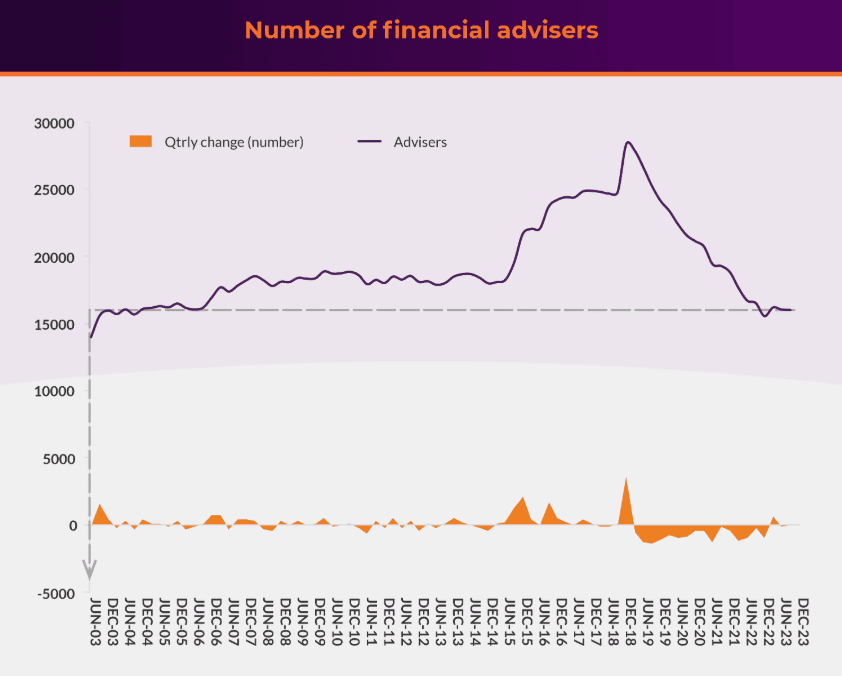
Chart source: Rainmaker
These professionals help individuals and families manage their money and plan for their financial future.
A whole range of stats shows us where money is going, from daily essentials to discretionary purchases. These insights reveal trends in consumer behavior and offer a clearer picture of how spending choices impact overall financial health.
The average American spends nearly $73 thousand annually, which makes for a total of $13 trillion nationwide.
The average Canadian spends most of their money on housing ($7.6 thousand) and transport ($4.5 thousand).
Italians, French, and German youngsters also spend a fair share of their budgets on personal development — more than 20%.
At the same time, two-thirds of respondents said their household spending changed because they spend more on essentials such as groceries and bills.
Financial planning stats aren’t just numbers. On the contrary, they explain how we approach our money, where we’re thriving, and where there’s room for improvement. That’s why we encourage you to recognize where you stand in relation to these statistics. If you follow this approach, it will be much easier to improve your habits and ensure long-term financial security.

Dražen Vujović is a journalist and content writer. More importantly, he is a father of two and a long-distance runner.


