


Leasing commercial space without a well-designed application process is like handing your keys to a mystery guest. That’s why every real estate professional needs to approach a lease application as their first filter for serious and financially stable tenants who actually fit the space.
Whether you're managing a downtown storefront, a suburban office park, or anything in between, this commercial lease questionnaire template will help you gather the right details up front without starting from scratch each time.
Sign up for free to get access to our ready-made and fully editable commercial property questionnaire. Take the hassle out of data collection with Content Snare.
We’ve put together a set of 41 questions to guide you through the client onboarding process. You’re welcome to tailor the questions and sections in a way that better suits your approach and area of expertise.
| Note: We’ve added screenshots so you can see what questions would look like if you were using Content Snare to build a commercial lease questionnaire. With hundreds of 5-star reviews across platforms like G2 and Capterra, Content Snare is one of the most trusted solutions for secure file collection and automated client onboarding. You can access all of our templates for free through the library of built-in online forms. |
This first section identifies the legal and operating name of the business applying for the lease. It helps the landlord verify the entity and understand its core business activities.
1. Legal business name

2. Trade name
Note: Skip if the same as legal business name.
3. Type of business
For example, this can be retail, office, hospitality, and so on.
4. Business structure
5. Years in operation
6. Website URL
Here, the prospective tenant provides up-to-date contact details for follow-ups and legal correspondence.
7. Primary contact person
8. Title/position
9. Phone number
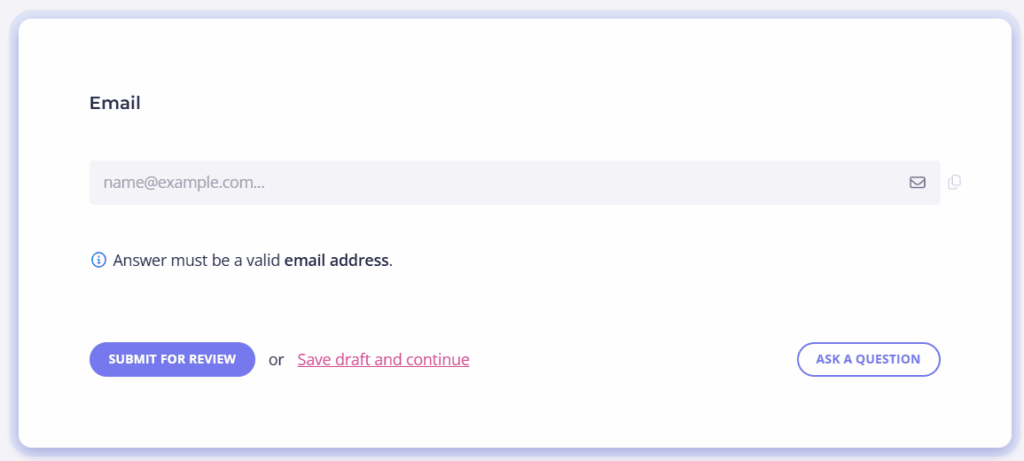
10. Email address
11. Business mailing address
This part outlines what the tenant is looking for in a commercial space, such as size, move-in date, and lease duration. It helps determine whether the available space and lease terms are a good match.
12. Desired unit address
13. Desired square footage
14. Preferred lease start date
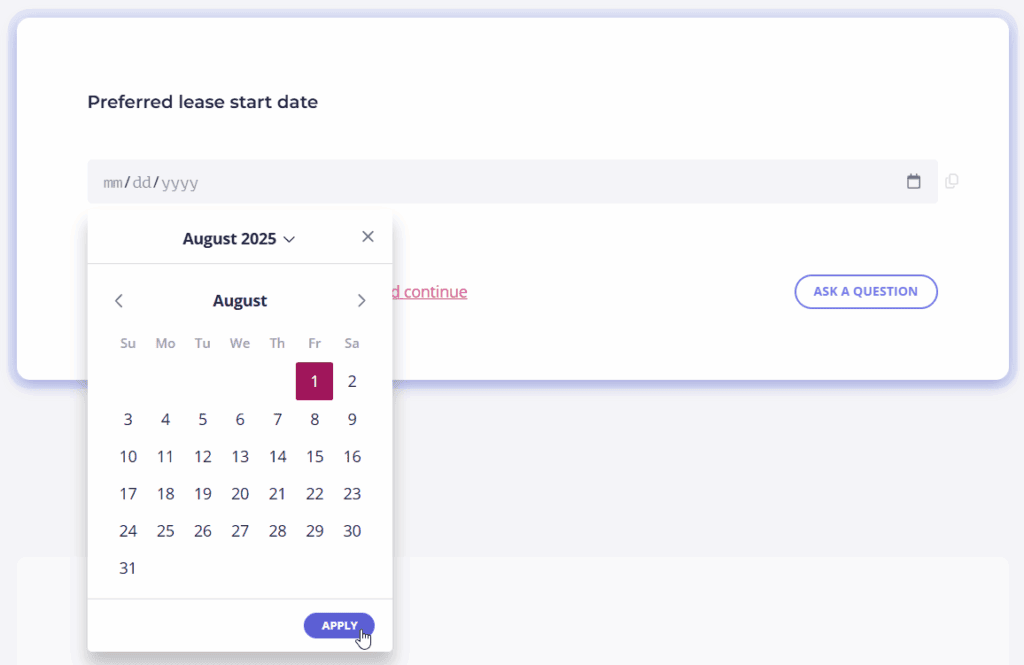
15. Length of lease term requested
16. Any tenant improvement needs (build-out requirements)
17. Intended use of premises
18. Number of employees on site
This set of questions helps understand the applicant’s financial strength and business history. Simply put, landlords use this data to evaluate the tenant’s ability to meet rent obligations.
19. Business description
20. Annual gross revenue
Note: Past 2 years
21. Projected next year’s revenue
Note: Feel free to provide a range.

22. Bank reference
Note: Name, email, and phone number
23. Accountant/bookkeeper
Note: Name, email, and phone number
In addition to business details, you’ll often request personal info about the owners or guarantors because it adds a layer of security in case the business defaults on the lease.
24. Full name
25. Will you personally guarantee the lease?
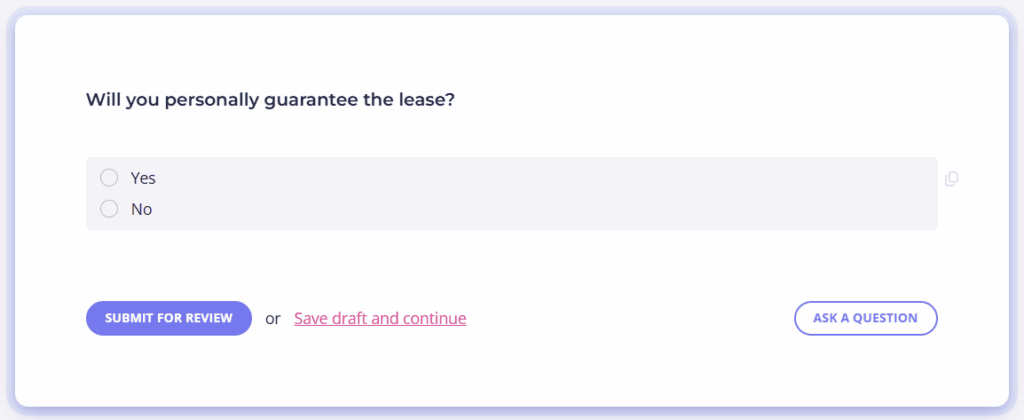
26. Home address
27. Phone number
28. Email
29. Percentage ownership in business
Professional references, especially previous landlords and vendors, help verify the applicant’s reliability and reputation.
30. Landlord reference
Note: Name, phone, email, address of current premises, duration of lease.

31. Trade references
Note: 2 vendors/suppliers with contact info.
This section covers any sensitive or material issues like bankruptcies or lawsuits. That way, landlords get full transparency and protection from hidden liabilities.
32. Has the business or any principal ever declared bankruptcy?
Note: If yes, provide details.
33. Any pending litigation involving the business or principals?
Note: If yes, provide details.
Applicants also need to include supporting documents that prove their financial and legal standing.
34. Business plan
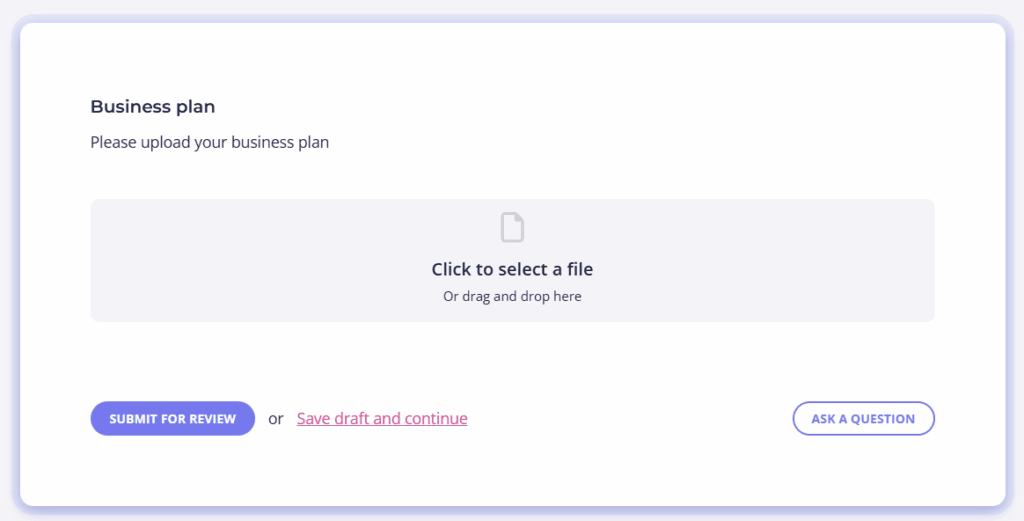
34. Financial statements
35. Tax returns
36. Government-issued ID
37. Business credit report
38. Articles of incorporation or business registration
By signing below, the applicant certifies that all information provided is true and authorizes the landlord or its agents to verify the information, including credit and reference checks.
39. Name
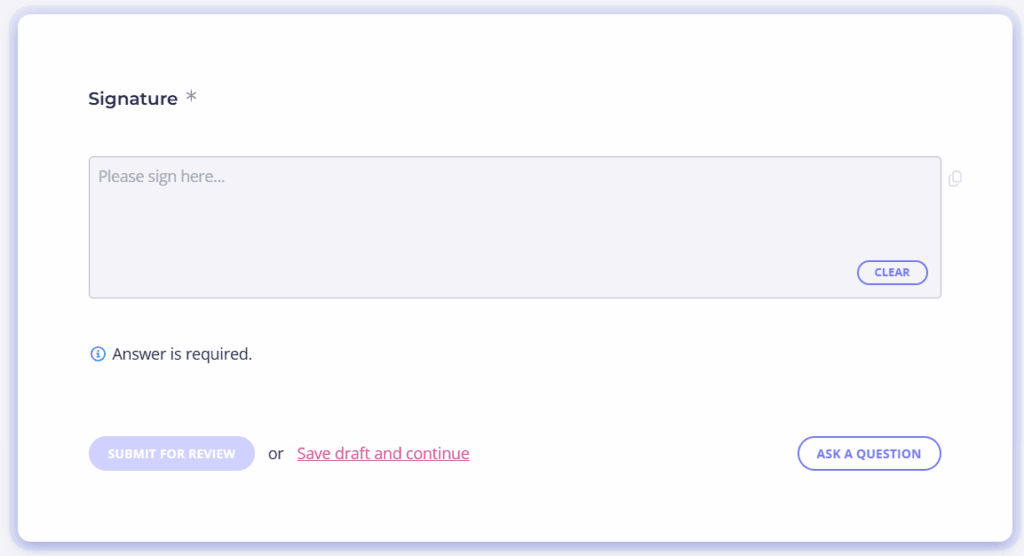
40. Signature
41. Date

A good lease application sets the tone for the entire tenant relationship, but managing all those details manually?
That’s a headache waiting to hit hard.
The real challenge is keeping everything organized and on time, which is where Content Snare quietly shines behind the scenes. Thanks to its built-in commercial lease questionnaire, automated reminders, in-form conversations, and auto-saving, the system makes it easy to gather information and documents from future tenants.
No messy email threads, no chasing documents, just a simple, professional system that works for you while you focus on closing deals.
Start your free trial and see how easy client onboarding can be with Content Snare.
Real estate professionals need to make sure the lease clearly outlines responsibilities for both landlord and tenant, especially regarding maintenance, repairs, insurance, and default remedies. Additionally, reviewing the financial strength of the tenant and securing personal guarantees will protect you against future risk.
Content Snare provides a branded client portal where respondents can upload files, complete forms, and track progress — all protected by military-grade encryption. Its automated reminders and customizable questionnaires make it ideal for real estate agents who require reliable and secure file collection workflows.
Content Snare has been helping businesses streamline document collection since it was first developed in 2016. With over 1,600 global clients, the platform is widely recognized in industries like real estate, accounting, legal, and finance as a trusted, scalable solution for onboarding and data gathering.

Dražen Vujović is a journalist and content writer. More importantly, he is a father of two and a long-distance runner.


