


In today’s fast-moving and competitive world, businesses that leverage the best technology have a competitive advantage over those that don’t — and accounting is no different. With the right software, you can:
When people think of software for accountants, the first thing that comes to mind is platforms like QuickBooks and Xero. But that’s just one piece of the equation.
In this post, we’ll look at the entire accounting software spectrum, providing a holistic view of the tools that can help you work smarter and faster. We’ll pick three of our favourite options from each of the following accounting software categories:
There’s naturally some overlap between software from different categories. Your job is to pick and choose the right blend of tools to streamline key accounting processes with the least possible friction.
Ready? Let’s dive in.
Accounting teams need to gather a lot of documents from clients to do their job. Without the right tool, this process can be a real bottleneck to productivity, not to mention the obvious issues around data security and access.
Document and file-sharing software can help here, providing a secure place to gather, store, and manage digital files. Here are three top options to make your life simpler.
G2 rating: 4.8
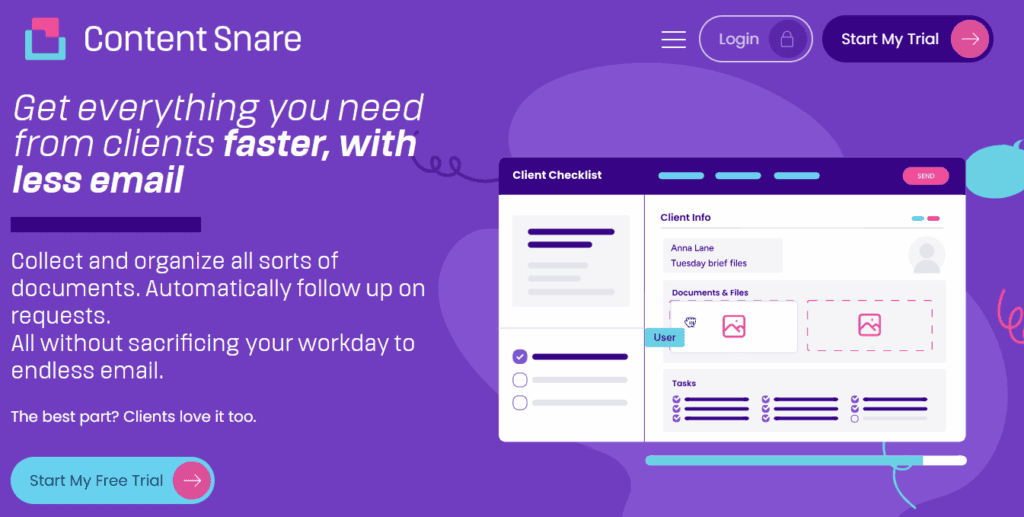
Content Snare is a secure, accountant-friendly tool that automates the client document collection process, eliminating hours of email follow-up. Whether you're collecting financial statements for year-end reconciliation, onboarding a new client, or gathering compliance documentation for a BAS or tax return, Content Snare lets you build custom questionnaires, send requests, and track client progress with ease. Northwest Accountancy describes it like this:
Our accountants get a complete, finished set of information with all questions answered before it comes to them to do the tax return. That’s a big one for us.
Key Content Snare features accountants rely on:
And with our Zapier integration, you can create all sorts of automated workflows that save you time. For example, you can automatically send the information you gather to cloud storage, Google Sheets, or your task management platform.
Tired of chasing clients for missing info? With Content Snare, you can create custom forms, send automatic reminders, and gather all the information you need in one place.
G2 rating: 4.4
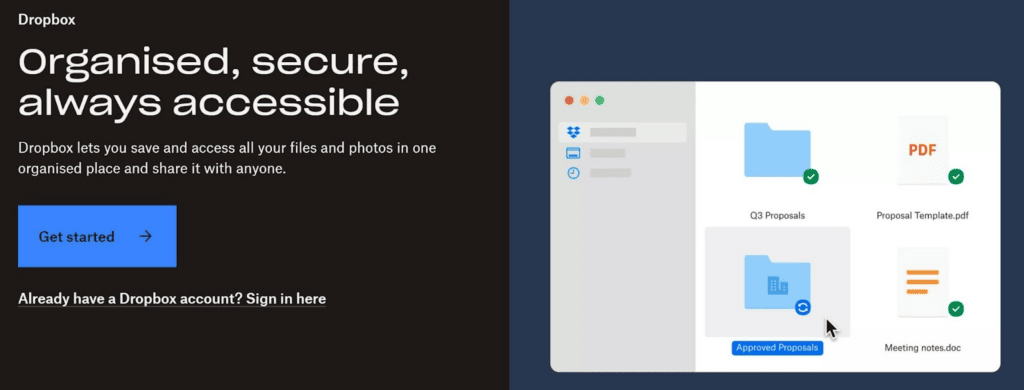
Dropbox is one of the most popular and trusted cloud storage tools on the market, with over 700 million users worldwide. Here’s what it offers:
Dropbox also offers a suite of additional tools covering areas such as e-signatures, password management, and collaboration. Together, these tools make an ideal solution for managing document storage, security, and workflows.
G2 rating: 4.3
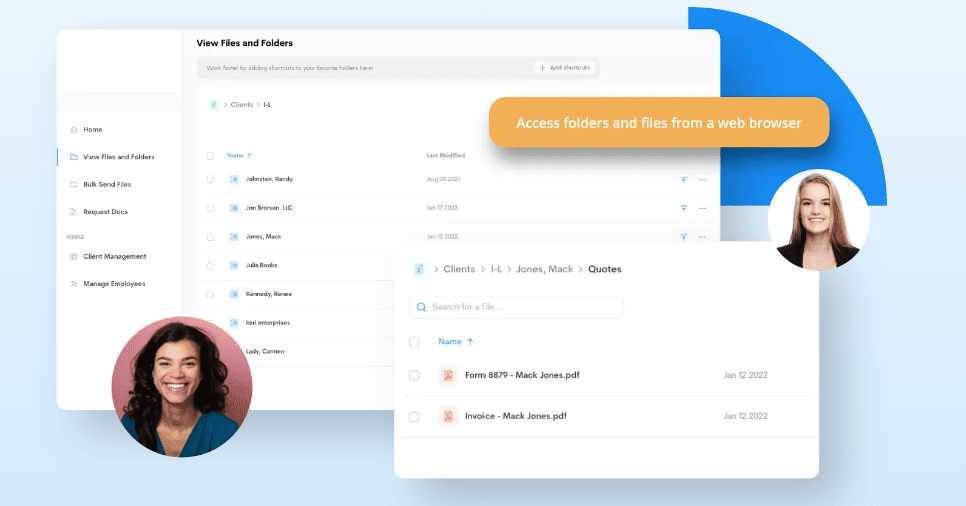
SmartVault is a popular secure file portal and document management solution. In addition to all the file storage stuff you’d expect, it offers some handy additional features, including:
And with integrations to tools such as TaxCalc, DocuSign, and Intuit Lacerte, SmartVault allows you to unlock tons of handy accounting features.
Practice management software is designed to help accounting firms manage the day-to-day running of their business. It spans areas such as team collaboration, client communication, document management, and task management.
The beauty of practice management software is that it provides a central hub for core processes, so there’s less switching between different tools.
Here are three of the best platforms on the market.

G2 rating: 4.8
Karbon is a popular practice management platform designed to help accounting firms communicate, collaborate, and work smarter. Here’s what it offers:
As the user reviews show, Karbon is a fantastic tool for any forward-thinking accounting firm — especially those with remote, hybrid, or dispersed teams.

G2 rating: 4.6
Canopy allows you to combine all your key processes and systems in one place. It starts with a foundation of client management and allows you to add modules on top to suit your specific needs. For example, Canopy covers:
On top of this, Canopy offers solutions designed to help your firm stay compliant, covering tax resolution, client correspondence, and legal agreements.
G2 rating: 4.8
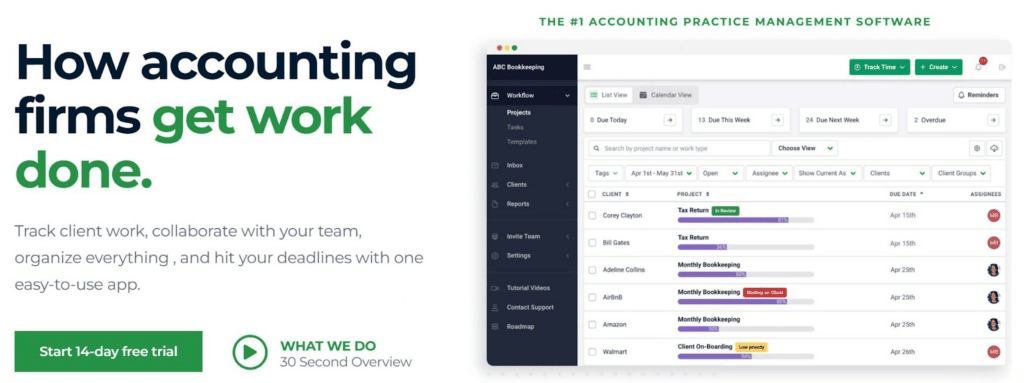
Financial Cents is another popular practice management system. It offers a broad range of features designed to make your accounting firm run like a well-oiled machine. With Financial Cents, you can:
As a glance at customer reviews will confirm, Financial Cents is known for being easy to set up and use.
Understanding what needs doing, who's going to do it, and when is essential for the success of any accounting firm. This is where task management software can help. Here are three of the best tools on the market.

G2 rating: 4.4
Unlike the other task management tools on this list, Accelo is specifically designed with professional services firms in mind — and it shows. Accelo provides everything you need to track and deliver client work, from first contact through to payment. In terms of task management, it offers:
Really, Accelo is more than your standard task management tool. What makes it stand out is its focus on time and money — and the connection between the two. Not only does it help you track progress through tasks, but it also makes your firm more profitable.

G2 rating: 4.3
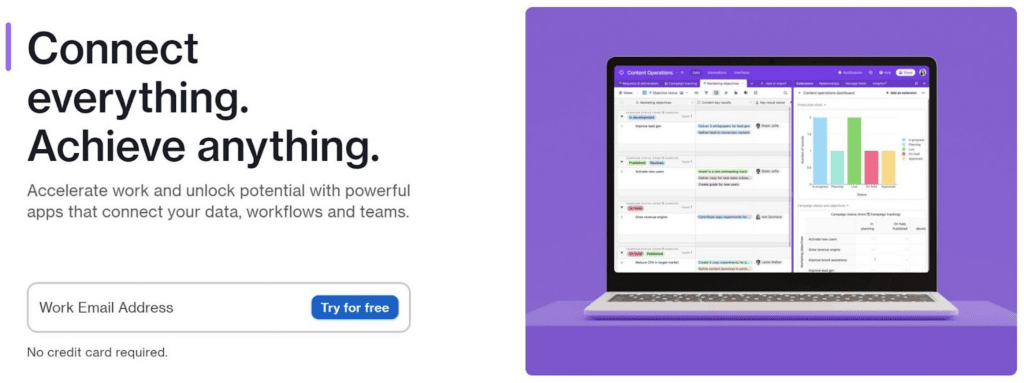
Asana is the go-to project management platform for countless businesses worldwide — and for good reason. It’s packed with features that simplify task and project management, providing visibility and direction to modern teams. Here’s what it offers:
And with seamless integration with popular tools like Slack, DropBox, and Google Suite, Asana can easily become a central hub for team collaboration.
G2 rating: 4.6
AirTable is a cloud-based software that takes a slightly different approach to collaboration and task management. It combines the best features of a spreadsheet and database, without conceding too much in the way of usability. With AirTable, you can:
Airtable’s functionality is so flexible that it covers multiple use cases, with task management being just one. Some people might be put off initially by its spreadsheet-style approach, but once you get used to it, it’s a powerful way to stay organised.
Every accountant wants to be able to do more with less. This is exactly what process automation software allows you to achieve. By automating repetitive processes, you can spend more time delivering real value to your clients. Here are our three favourite tools.

G2 rating: 4.5
Zapier is a popular automation tool that allows you to connect different web-based applications and send data between them. This enables you to create automated workflows that save you time and money. With Zapier, you can:
Zapier is known for being relatively easy to use. This makes it a popular choice for small businesses and accounting firms that lack the in-house expertise for more technical automation platforms.
G2 rating: 4.7
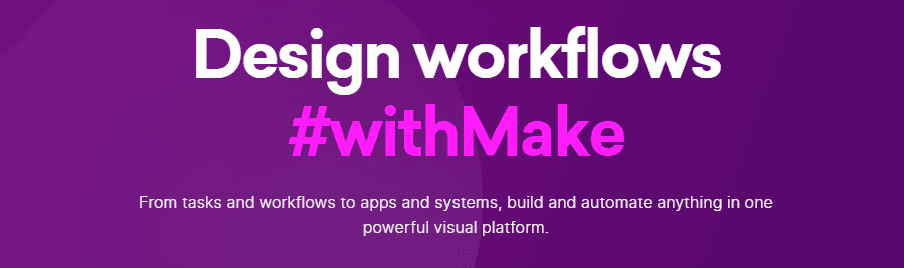
Formally known as Integromat, Make offers similar outcomes to Zapier, but it gets there in a slightly different way. Here’s how it works:
Make is generally more complicated to use than Zapier, especially if you don’t have a technical background. But as a result, it allows you to do more.
G2 rating: 4.6
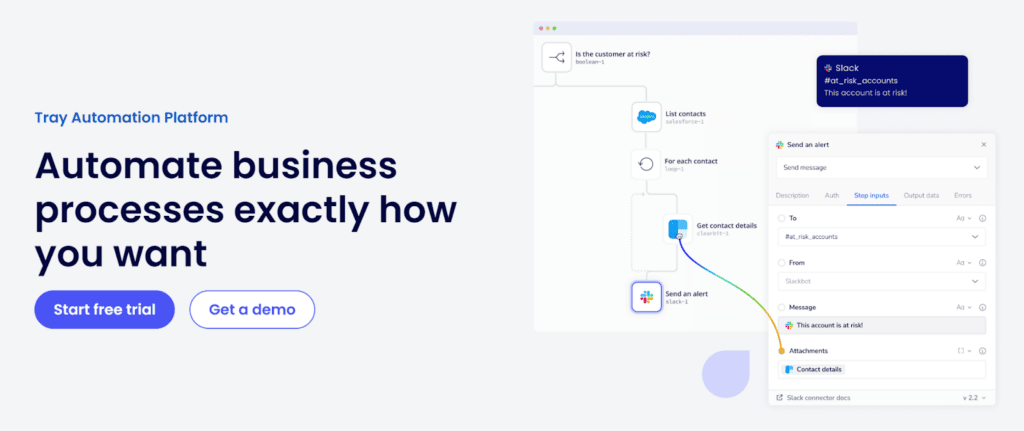
Our third automation tool on this list, Tray.io shares a lot of features with its direct competitors. That said, there are a few points that make it stand out from the crowd, including:
Unlike the other two tools in this section, Gate.io is aimed primarily at the enterprise market, so accountants at small businesses may want to look elsewhere.
Accounting is a team sport. And with remote and hybrid work now the norm in many firms, communication and collaboration have never been more important. Here are three of the best tools to bring your team together.
G2 rating: 4.5
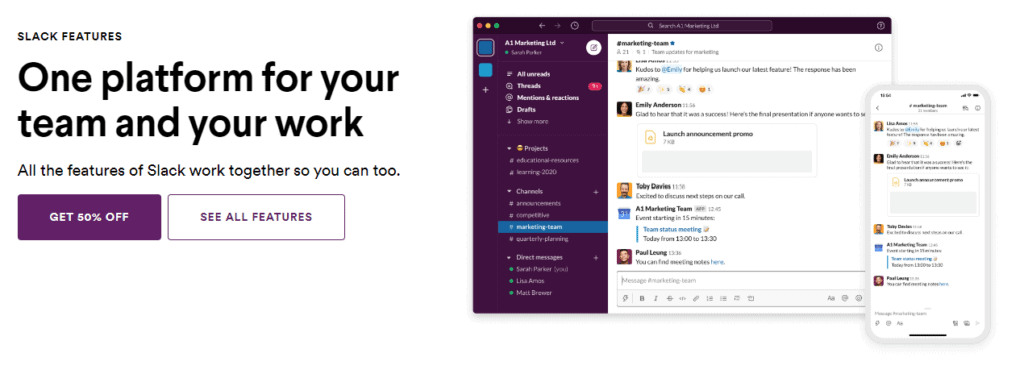
Slack is the go-to communications platform for over 100k businesses worldwide, including 80% of the Fortune 100. It acts as a central hub, seamlessly connecting individuals, teams, and departments. Here are some of its key features:
Slack offers a pretty decent free version, but to get unlimited message history, apps, and integrations, you’ll need to upgrade to a paid plan.

G2 rating: 4.5
Having exploded in popularity due the rapid rise of remote work, Zoom remains one of the best video conferencing tools around. Here’s what it offers:
Zoom is an excellent choice for internal collaboration as well as client-facing meetings. And with seamless integrations with your email and calendar tools, setting up meetings couldn’t be easier.
G2 rating: 4.2
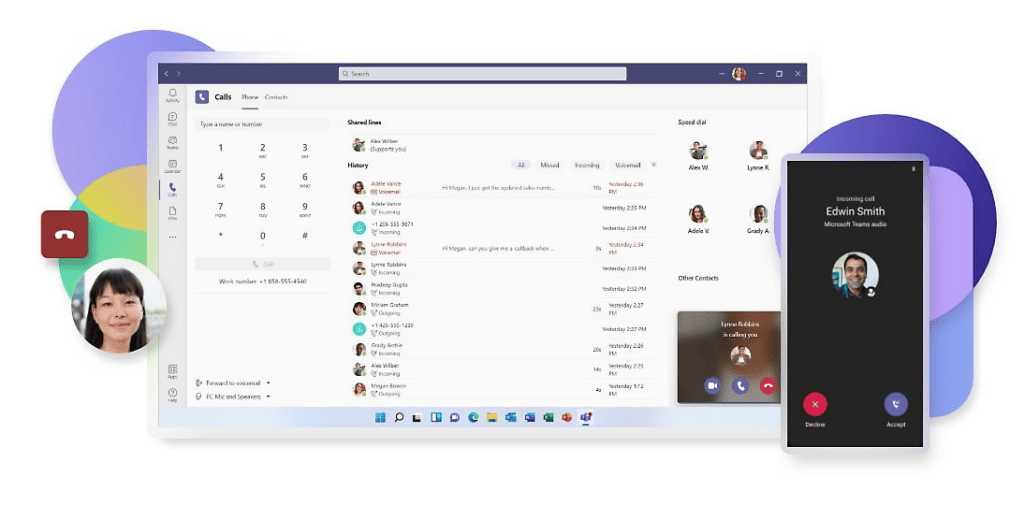
Our third pick for this category is Microsoft Teams. While Teams is often seen as Slack’s great rival, its mix of real-time text-based conversations and video calls makes it a competitor for Zoom too. Here’s what it offers:
In many ways, Teams is a bit like Slack + Zoom, providing a more comprehensive collaboration platform than either are able to. That said, fans of Slack and Zoom probably wouldn’t swap over for the world.
Accounting involves tracking billable hours, managing multiple projects, and keeping accurate records. Time tracking software can help you understand the time you are spending on each task — and invoice your clients appropriately. Here are our top three pics.
G2 rating: 4.5
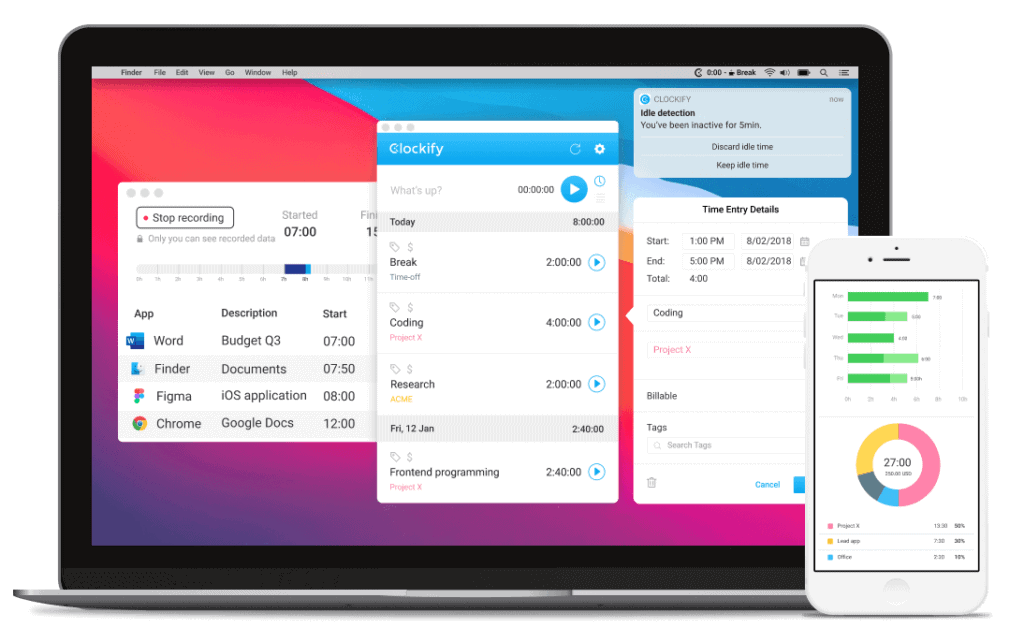
With millions of users worldwide, Clockify is the self-proclaimed “most popular free time tracker for teams.” Let’s take a look at its main features:
Clockify offers plenty of useful integrations, so you can tie time tracking to your accounting software, task management tool, or customer relationship management platform (CRM). The fact it’s free is pretty mind-blowing.

G2 rating: 4.7
TimeCamp is another handy tool for tracking time and boosting productivity. It’s especially popular in the IT space, but there are loads of handy features that accounting firms will benefit from. Let’s take a look:
A look at TimeCamp’s user reviews shows that it’s a highly intuitive and easy-to-use tool that does most of its work in the background.
G2 rating: 4.8
Timely is an AI-powered time-tracking tool with a strong focus on automation. As a result, you and your team can spend more time working and less time on admin. Here’s what it offers:
Timely works by connecting to the different tools that employees are using. It then creates accurate reports that break down the time spent in different apps and on different tasks.
Accounting is a serious business involving a lot of sensitive and confidential data. This makes security a priority. While we could easily dedicate an entire post to security-focused tools, here are three ones to keep on your radar.

G2 rating: 4.3
A VPN is an essential tool in your security toolbox, and NordVPN is one of the best. By creating a secure and encrypted connection between devices and the internet, accountants can work safely online — even on public networks. Here’s what you get:
For all the technical stuff that’s going on under the hood, NordVPN is incredibly simple to use. You can connect to a secure VPN from anywhere in the world in a matter of seconds.
G2 rating: 4.7
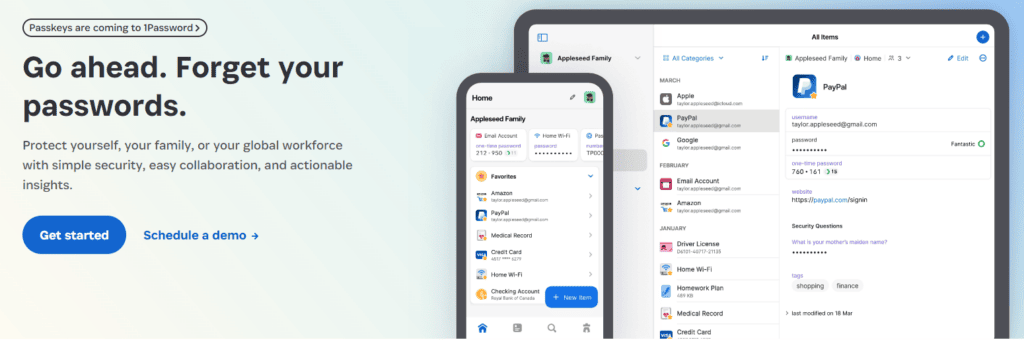
Weak passwords and poor password management are often the weak points in a business’s security. The risk of password-related security threats increases with the number of tools you use. This is where 1Password can help. Here’s how it works:
In other words, 1Password simplifies password management while making your systems more secure.

G2 rating: 4.5
Okta is a cloud-based identity and access management tool. It offers secure and seamless access to your tech stack, allowing you to manage identities, authentication, and authorisation from a single platform. Here’s how it works:
Okta offers thousands of integrations with popular apps, as well as APIs for additional connections, making it simple to manage access to all manner of tools.
Accountants tend to be busy people. With so much work to do serving current clients, there’s often little time left for closing new clients. This is where proposal software can help. Let’s take a look at three of the best proposal software tools on the market.

G2 rating: 4.6
Designed specifically for accounting firms and other professional services businesses, Ignition offers tons of advanced features to help you streamline and systematise the proposal process, including:
As an accounting-focused platform, Ignition offers seamless integration with the most popular accounting and practice management software.
G2 rating: 4.7
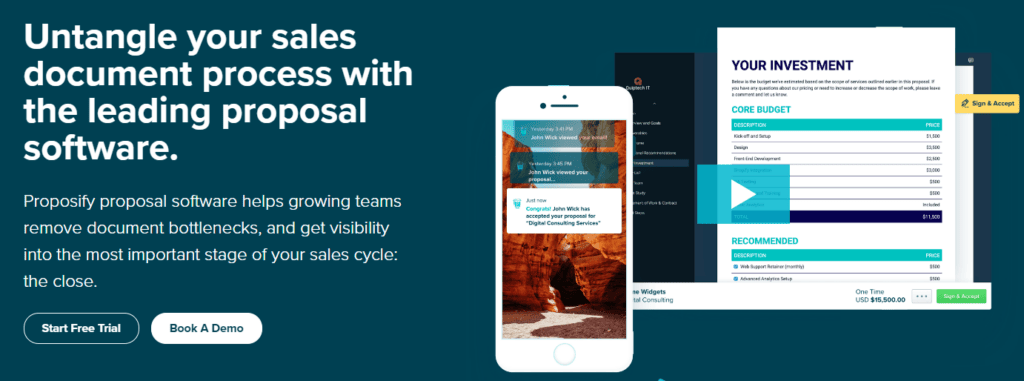
Proposify aims to unblock the proposals bottleneck, allowing you to create, share, and manage proposals with minimum effort. Described as your “Chief Closing Officer,” it offers the following features:
Proposify claims that their proposals have twice as good a closing rate as the industry average, which is pretty remarkable

G2 rating: 4.5
Qwilr is primarily aimed at salespeople, but it offers tons of features that will help accountants save time and attract new clients. Here are some examples:
Qwilr allows you to manage the entire proposal process, from creation to signing and payment. But what makes it stand out is its strong focus on aesthetically beautiful proposals.
Last but not least, let’s look at the software category that forms the backbone of your tech stack: accounting software. In a crowded market, here are three of the best options.
G2 rating: 4.3
Xero is one of the most popular cloud-based accounting software tools out there. It’s especially popular with small-business owners, who appreciate its mixture of accounting features and simplicity. Let’s take a look at what it offers:
If you’re looking for small-business accounting software, Xero is a solid choice. And with Xero Practice Manager and Xero Tax, you have a suite of tools to streamline key accounting tasks.
G2 rating: 4.5
Zoho Books is another great option. This cloud-based accounting software offers tons of advanced features to help save you time and improve accuracy. It’s also known for its simplicity and ease of use. Its key features include:
If you’re looking for free accounting software for small businesses, Zoho Books is the best option.

G2 rating: 4.0
As the market leader in the accounting software space, QuickBooks needs no introduction. Designed to help professional accountants, small-business owners, and freelancers manage their books, it offers the following accounting features:
QuickBooks also offers a range of integrations, allowing you to connect to your CRM, payments provider, e-commerce platform, and more.

Nicholas Edwards is a content writer from the UK.


