


Have you come across the term ‘tone of voice’ and wonder what it is and how it applies to your business? If you create any marketing content for your brand (online or offline), then tone of voice is important to you. But what is tone of voice exactly? Why does it matter to your business? And how do you decide which tone of voice is right for you and your brand?
In this article, we focus on tone of voice in writing, and specifically writing for the web. So if you write website copy, social media posts, newsletters, etc. this applies to you. But you can use these principles for all types of online and offline communication too. So if you have an offline presence, thinking about tone of voice can help you with things like leaflets, brochures, business cards, etc.

In its simplest definition, your tone of voice is how your brand sounds when you write. Your tone of voice is directly responsible for the impression you make on your audience through the words and expressions you choose to use. When people read your words they should know it’s you.
So if you're a personal brand, for example, you want your tone of voice to be as close as possible to how you sound in real life. And if you are a bigger business, you still need to work out how you want your brand to come across because your tone of voice influences what people think, how they feel, and what action(s) they take after reading your words. So it's not just about what you say. It's also about how you say it!
It's worth mentioning that in writing and literary circles, a strong distinction is made between the terms 'voice' and 'tone'. Voice is defined as the distinctive personality of your writing - it's what makes you unique and recognisable and allows your audience to see your character. Your voice is one and one only.
Your 'tone', on the other hand, can change because it's what reflects the mood and feelings of your writing and helps you to connect with your audience through your content.
Best-selling author Ann Handley talks about the difference in this way:
"Voice doesn't change, but your tone should, depending on the feeling you are trying to convey."
For the purpose of this article, we are going to talk more broadly about your tone of voice as the way your business comes across through your writing.

So why does your tone of voice matter when it comes to your business? Your tone of voice represents your brand and what you stand for. It helps you communicate your brand identity and values to your audience. In other words, your website visitors get a sense of who you are as a business from how you write what you write.
This explains why it's also important for your tone of voice to be consistent and recognisable. Thinking more strategically about your tone of voice should be a fundamental part of your branding and marketing strategy. It should be baked in to your content workflow. Without a consistent tone of voice, you’ll end up sending mixed messages to your audience. And whether they consciously realise this or not, once your audience picks up on this, they might become confused about who you are as a brand, and, crucially, about why they should buy from you and not from your competitors!
A consistent tone of voice helps your brand build trust, credibility, and authority with your audience. It makes you more approachable in the eyes of your consumers, it builds loyalty, and ultimately it gives people the confidence to buy from you.
So let’s bring this to life with some examples.
Your tone of voice could be serious, formal, traditional, and ‘buttoned up’. Or it could be relaxed, informal, conversational, and friendly. And it could be anything else in between!
The best way to think about this is to focus on how you want your brand to come across. If you imagine your brand having its own voice - what would it sound like?
But let's see this in action.
Innocent Drinks (now partly owned by Coca Cola) are probably the most-renowned example of a brand who is using tone of voice exceptionally well to help their audience understand the kind of business they want to be. When Innocent started out back in 1998 as a 3-people startup, no other company was being daring enough to crack jokes on their packaging! But Innocent Drinks started doing just that.
They decided to be the brand who talks directly to their consumers – the real people who pick up their drinks from the shelves. Their tone of voice is natural, conversational, informal, friendly, and engaging. They go to the extent of including their phone number on every smoothie bottle. And they even invite people to go to their offices to have a chat!
To tell you that their drinks are good for you, they choose expressions like 'so darned healthy', which certainly draws your attention and isn’t what you would expect to find on the packaging of a drink. The guys at Innocent are also quite cheeky in the way they communicate with their consumers.
For example, one of their packages reads:
“Detoxing is pretty simple. First of all, cut out all the bad stuff. Check all pockets for any stray cream buns.”
And another one:
“My mum’s started buying our smoothies (and that’s after 5 whole years, the skinflint). This means that I’ve got to behave and not say anything too rude or controversial. So, mum, they are really good for you.”
Once you become familiar with the type of things you may find on Innocent Smoothies bottles (and the way they’re phrased), you'd probably recognise it's them even if you didn't see the branding. Because who else calls their mum a skinflint on their product packaging?! Remove the name and branding, and you'd still know it's them. This means they have a strong, solid tone of voice. And as a result of their brilliant choices, they come across as a business who is responsible, approaching, and genuinely cares about the people drinking their smoothies.
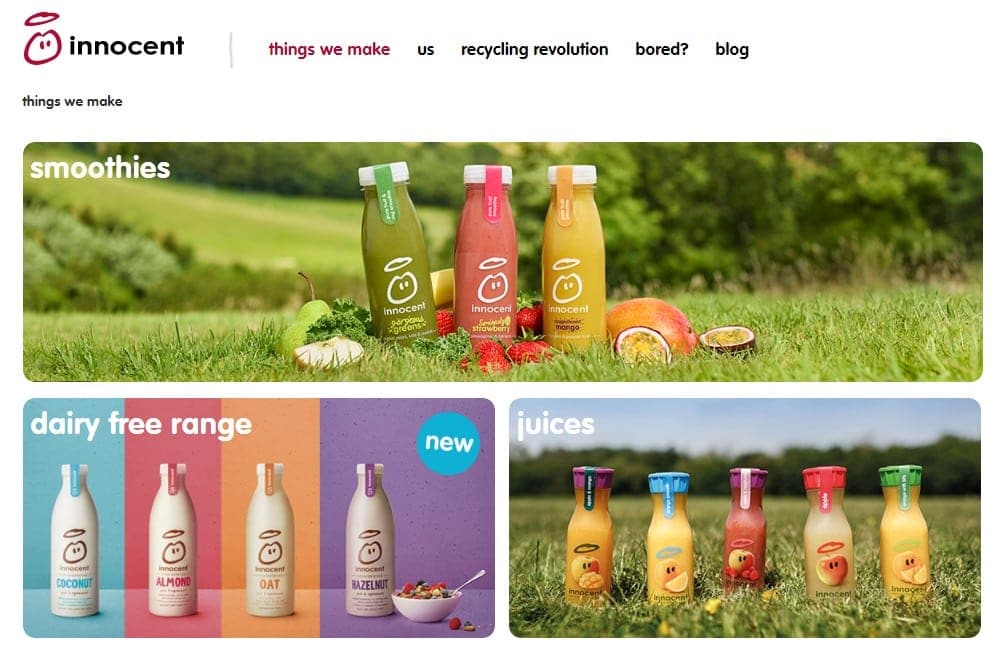
Innocent Drinks are a great example of a brand who is using their tone of voice extremely well. Plus you can tell they're certainly having fun with it! Other brands with a consistent voice are Apple, Oxfam, and Virgin, for example. Go check them out and pay attention to how they communicate with their readers.
Hopefully, by now you're convinced about the need to think more intentionally and strategically about your tone of voice. But before we get into how you do that, let's look at some of the things you might want to avoid doing when defining your brand tone of voice.
Serious and professional doesn't necessarily translate to stuffy, corporate, and robotic, an AI Humanizer can keep your voice natural. Of course, you want to be taken seriously. If you're a freelancer or an agency owner, you might want to land contracts with bigger brands or corporate clients. But that doesn't mean you have to put on 'a formal hat' when writing content for your website (or anywhere else online!) and start sounding completely different to the way you talk in real life!
A lot of business owners struggle with this, and when putting pen to paper (or fingers to keyboard), the temptation is to write in a way that sounds formal, corporate, and ‘detached’. Unless that's how you are in real life (unlikely), you want to sound like yourself, especially if you're building a personal brand! So think about the way you speak to another human being. You can still be taken seriously and come across as a knowledgeable professional who's worth hiring and working with.
If a large international company like Innocent can use the first person on their packaging (“My mum” and “I have to be good”), why can’t you? Of course, whether you use the first person (“I am a content writer”) or the third person (“Jack is a content writer”) is completely up to you.
But be mindful of the distance that using the third person creates between yourself and your audience or your products and services. Of course, if that's intentionally and part of your branding, then great. But if not, consider switching to the first person. It allows you to create a more personal rapport with your audience. And when it all comes down to it, people buy from people. Even when we’re buying from a large corporation like Innocent, we like to think we’re buying from the person behind the brand.

Instead of saying:
"I help business owners write content for their website".
You can say:
"I help business owners like you write content for your website".
Choosing a more direct tone helps your audience see themselves as someone using your services. Plus, it shows you value them as individuals.
By using acronyms or jargon that are specific to your industry but that your audience doesn’t yet understand won't do you any favours. No one wants to feel stupid, so make your content easy to access and understand. Write in plain English and put yourself in your readers' shoes when writing a piece of content. You can't go wrong with this. Remember the way you express yourself and come across in your writing has the power to influence how people react and how they feel. So use it wisely.
As we said earlier, tone of voice isn't just about what you say but how you say it too. So when writing, think about how you are phrasing your content.
Do you want to be known as the brand that takes forever to get to the point? Probably not. Attention spans are short, so show your readers that you respect them enough by sharing your message in brief, clear, and compelling writing.
The best way to make sure your tone of voice is always consistent and recognisable wherever you show up in writing is to create some 'tone of voice guidelines'. Documenting your tone of voice principles allows you (or anyone writing for you) to refer to this advice when you are creating content for your brand.
Whether you're a one-person band, an agency, or a large company with lots of staff, you want your content to always be ‘on brand’ and to resonate with your audience. And by documenting your tone of voice guidelines you get to ensure you always sound consistent and in the way you intend to.
So how do you identify your tone of voice in order to document it?
You may have done this exercise before (and maybe even more than once!). But it never hurts to do it again.
So think about:
Obviously, there’s no right or wrong here. All you have to do is to pick the characteristics that best describe your brand. If you have already created brand guidelines for your business, use your findings to inform your tone of voice principles too.
Depending on the type of business you run, your company might be made up of just one person - you. Or you might have contractors, staff, or employees. So what is your company’s culture? Or what do you want it to be? Again, think about your values, beliefs, and priorities and let these ideas inform your tone of voice guidelines.
If you're a personal brand, your business is more about how you are than what you think!
So:
As we mentioned earlier, it’s not just your message (i.e. the things you say) that needs to be consistent. It’s also about how you say things. So think about what you say to your customers and clients in person. This could be client meetings, discovery calls, and networking events. But if you also create audio or video content in the form of a podcast or video, think about those too.
If you're not sure, ask your colleagues, staff, or friends for input. Then jot down what you find and try to stay true to the way you're saying things.

While your voice (your brand personality and character) always stays the same, the way you relate to your audience at different stages of the customer journey may change. The tone you use during a sales pitch or a discovery call is different from the one you have during a catch-up with an existing client. And this is especially true if you have more than one set of ideal customers.
So map out your customer journey and think about all the touchpoints – i.e. all the scenarios where you come in contact with your clients and with different segments of your audience. How does your tone of voice change to reflect these interactions to help you trigger different reactions?
The tone of voice you use in your business is primarily an expression of your own brand. But the best way to influence how your audience relates and reacts to your content is to include language that reflects the way they speak. So how do your ideal customers and clients talk about a particular problem, situation, or struggle they’re experiencing?
Here are a couple of places where you go and look for inspiration:
Record some of these words and phrases and make them an integral part of your vocabulary. This helps you build rapport with your audience by showing them you 'get them'. And in turn, they'll be more likely to identify with you, your brand, and what you sell.
If you already have a lot of content, analyse and audit what you already have. This helps you identify what you're already doing well and what you might want to stop, start, or continue. You can do this yourself or get an external pair of eyes to help you with this exercise. This could be a member of staff, a colleague, a friend, an external consultant, or whoever you see fit. And don't forget to look at your analytics to understand what content seems to resonate with your audience the most.

Once you've identified what your tone of voice should sound like, it’s time to document your findings! So spend some time thinking about the questions above and flesh it all out.
The way you choose to document your tone of voice guidelines is up to you and depends on your own preferences, the size of your business, and your needs. Anything from some bullet points listed at the back of an envelope all the way to a 50-page handbook will do! The format doesn't matter. What matters is that you make this piece an integral part of every piece of content or communication you and your team produce under your brand.
So here are some pointers to help you decide what to include:
If your content is written at different times and by different sources, it can be hard to keep your tone of voice consistent and in line with the principles you've identified and put together. Content Snare allows you to gather content and files in one place so you no longer have to trawl through separate documents and emails.
If you want to find out more, have a look at the type of businesses that use us and what they think about our product.

Sara Bussandri is a Digital Content Writer who helps small business owners and successful podcasters with blogging and re-purposing audio/video content into SEO-friendly blog posts. At home, she’s a mum of three boys who works around school runs, laundry loads, and football matches.


