
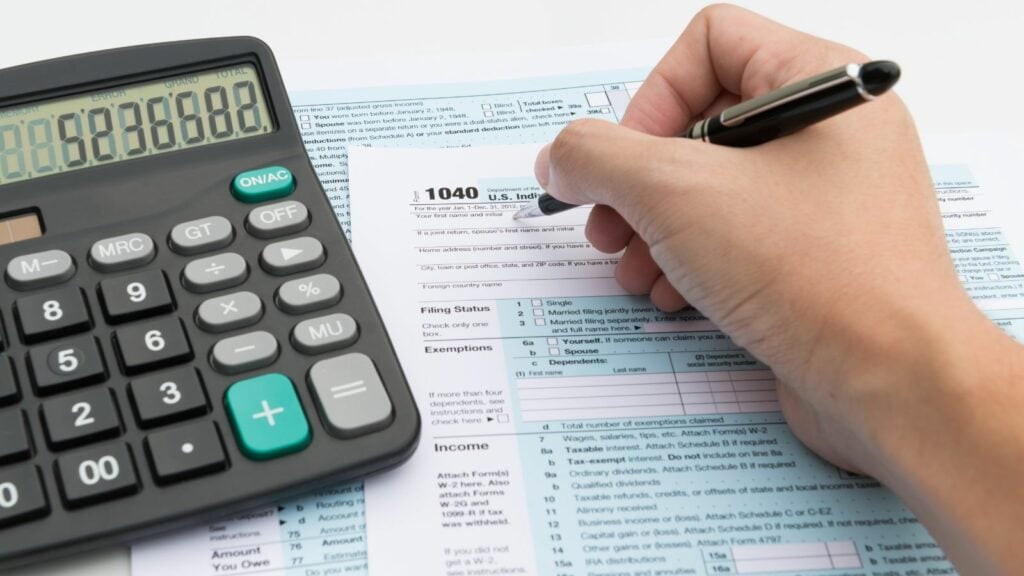

Tax season can be a daunting time for even the most experienced accountants. With so many clients to serve and documents to gather, the risk of missing something is huge.
With the right preparation and planning, however, this process can become much smoother and less stressful — and a tax preparer checklist is a great place to start.
In this article, we’ll explain everything you need to know about creating an effective tax preparation checklist, including:
But before we dive in, let’s answer an important question.
Using a tax return checklist can bring a whole host of benefits, leading to a smoother tax filing experience.
Perhaps the most obvious benefit is that checklists help to provide structure and consistency to the tax return process, enabling you to tick off tasks and gather tax documents one step at a time. This leads to:

Now that we know what tax preparer checklists are and why you should be using one, it’s time to look at the type of items your checklist should include. Below, you’ll find a checklist example, complete with the documents you would need to collect for each item (in bullet points).
Please note: This is a generic example of a checklist. In reality, it’s impossible to provide a comprehensive checklist template that will suit every accountant. The specific documents and tax forms you’ll need will depend on factors like your client’s circumstances and the tax regulations and accounting standards used in your country or state.
Let’s start with the basics. Capturing personal information is a critical first step in the tax preparation process. The information you gather here will help you communicate with your clients and identify them for tax purposes.
1. Name
2. Social security number (SSN) or taxpayer identification number (TIN)
3. Date of birth
4. Marital status
5. Bank account details (for the direct deposit of your client’s tax refund)
Next, we’ll gather information about your client’s various sources of income. Accurately reporting income is critical for complying with tax regulations, so be as thorough as possible.
1. Are you employed?
2. Are you self-employed?
3. Do you own any rental properties?
4. Do you have any income from investments? (Interest, dividends, capital gains, etc.)
5. Do you have any retirement income?
6. Have you received any unemployment or sickness benefits this tax year?
7. Have you had any other sources of income this year? (Alimony, jury duty, gambling winnings, etc.)
By maximising deductions and credits, you can significantly reduce your client’s tax liability. In this section, we’ll explore some commonly claimed deductions and credits
1. Are you a homeowner?
2. Do you pay state or local income tax?
3. Do you have any medical expenses?
4. Have you made any charitable contributions this year?
5. Do you have any education-related expenses?
6. Do you make regular pension contributions?
7. Childcare credits
8. Income tax credits
9. Education credits
10. Adoption credits
11. Have you made any energy-efficient improvements to your home? (Insulation, solar panels, etc.)
In addition to covering your client’s medical expenses, health insurance can also have implications for their tax obligations. In this section, we’ll collect any relevant health insurance documents.
1. Do you pay for private health insurance?
2. Are you enrolled in an employer-provided health insurance policy?
Clients who own a business have additional considerations when it comes to tax preparation. In this section, we’ll gather all the information we need about business-related finance and expenses.
1. Do you own a business?
2. Do you use your home or vehicle in the running of your business?
3. Do you have any other business-related expenses? (Travel, meals, entertainment, etc.)
4. Do you employ any freelancers or subcontractors?
As you can see from the example checklist above, filing a tax return involves gathering a lot of documents and information. When you consider that this process is repeated again and again across tens or hundreds of clients, you can see how important it is to have a well-thought-out system in place.
Thankfully, technology can help. In this section, we’ll look at some of the tools accountants typically use to collect client documents — and discuss how effective they are at the job.

Without a dedicated tool for requesting and gathering key documentation, many accountants rely on email to gather client documents.
On the face of it, email seems like a reliable option. You already have all your client’s contact details there, and attaching files is simple enough. You can write the tax checklist directly in an email. Plus, there’s zero learning curve for accountants or clients — email is one of the most widely adopted tools worldwide, and everyone already knows how to use it.
But when you actually start using email to gather documents at scale, you soon realise that it’s not fit for purpose. After all, email is a legacy communication tool, not a document-gathering tool. Here are some of the main reasons why it doesn’t work:
Some accountants use shared documents and spreadsheets to create checklists. Again, it’s easy to see why — most people know how to navigate tools like Excel, Word, Google Docs, or Google Sheets, and the latter two offer synchronous collaboration anywhere, anytime, and from any device. Plus, features like comments can be useful in providing context or answering client queries.
But despite these plus points, shared docs are still a round peg in a square hole when it comes to gathering documents for the following reasons:

Given that document gathering is quite a specific process, it makes sense to use a tool that’s designed specifically to streamline and enhance it.
Thankfully, there’s no shortage of data collection tools on the market. There are free options, like Google Forms, which is a pretty solid choice for gathering basic data. But free form builders usually lack the functionality and flexibility you need to gather a range of different files at scale.
With a tool like Content Snare, you can manage the entire process of gathering client documents. You can create and share custom checklists, complete with specific file-type requests. These checklists guide your clients through the process of submitting information one step at a time. Alternatively, you can use one of our ready-made templates.
On top of custom forms and templates, Content Snare offers a host of powerful features designed to streamline and enhance the document collection process, including:
The result is a complete system for managing the document-gathering process. Not only does this make your tax preparation process easier, but it also provides the slick, digital experience your clients now expect.
Tired of using outdated tools to gather key client information? It’s time you streamlined your tax preparation process with Content Snare.
Sometimes called a tax return checklist, a tax preparer checklist is a comprehensive document outlining the essential items you need to tick off — and the documents and information you need to collect — to effectively prepare and file a tax return.
A tax preparer checklist should cover all aspects of tax filing, from a client’s income to deductions and credits — but more on that later.

Nicholas Edwards is a content writer from the UK.


